



While many believe pet food pouches are recyclable, the reality is that traditional multilayer pouches cannot be processed by standard recycling systems—a challenge that Zhongjia Packaging is actively solving with innovative, eco-friendly materials. Sustainability has become a central concern in the pet food packaging industry, driving retailers and consumers to demand sustainable packaging and pushing brands to evaluate their environmental impact. Understanding what makes a pouch recyclable is essential for brands seeking eco-friendly solutions without compromising shelf life or product safety. Let’s dive into the facts with Zhongjia Packaging to find out the real truths.
What Are Pet Food Pouches Made Of?
Common Materials Used in Pet Food Pouches
Most pet food pouches are constructed from multilayer flexible packaging to maintain freshness and protect against moisture, oxygen, and aroma loss. Common materials include:
- PET (Polyethylene Terephthalate)
- PE (Polyethylene)
- PA (Nylon)
- Aluminum foil
- EVOH (Ethylene Vinyl Alcohol)
Why Multiple Layers Are Used
The combination of these layers provides:
- Superior barrier protection
- Resistance to punctures and tears
- Extended shelf life
- Retention of aroma and flavor
How Barrier Requirements Affect Sustainability
While these multilayer pouches are effective for food safety, they complicate recyclability. The more layers and materials used, the harder it is to separate them during recycling. This trade-off between product protection and environmental sustainability is a key consideration for pet food brands.
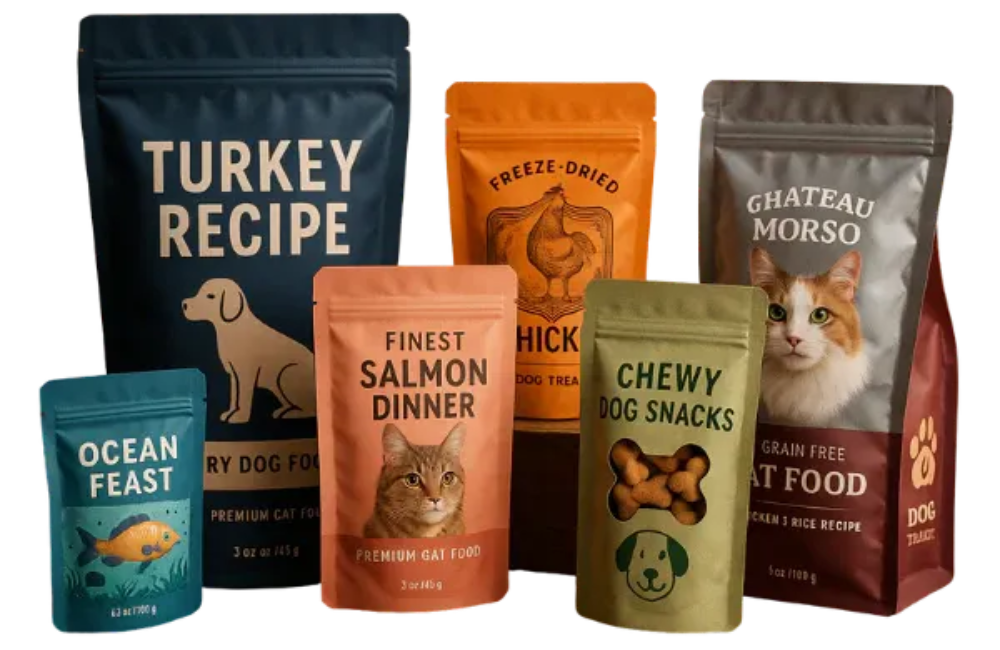
Are Traditional Pet Food Pouches Recyclable?
The Short Answer
Most conventional pet food pouches are not widely recyclable due to multilayer structures.
Why Multilayer Structures Create Recycling Challenges
Common pouches include combinations such as:
- PET/AL/PE
- PET/PA/PE
- PET/EVOH/PE
Separating these layers requires specialized processes not widely available, making them incompatible with standard flexible packaging recycling streams.
Current Recycling Infrastructure Limitations
- Limited collection systems for flexible packaging
- Difficulty separating different polymers
- Regional variability in recycling facilities
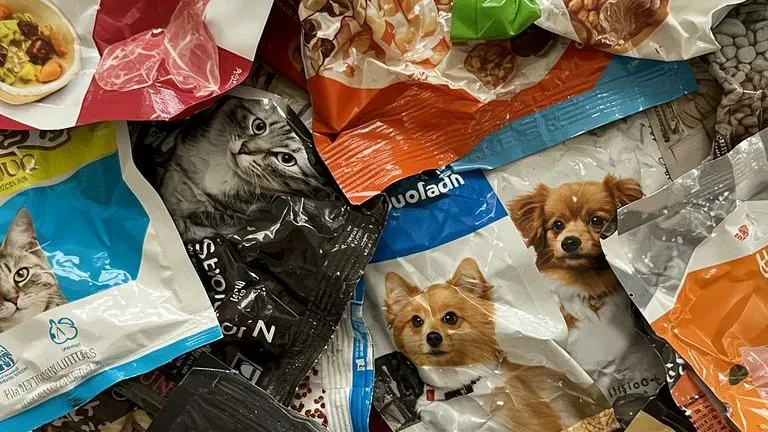
What Happens to Most Used Pet Food Pouches?
- Landfill disposal
- Energy recovery through incineration
- Rarely, specialized recycling programs
What Makes a Pet Food Pouch Recyclable?
Mono-Material Packaging Explained
A mono-material pet food pouch is made from a single polymer, usually PE or PP, allowing easy recycling without separation.
PE Mono-Material Pouches
- Compatible with existing PE recycling streams
- Maintains acceptable barrier performance for dry and some wet pet food products
PP Mono-Material Solutions
Emerging PP mono-material pouches offer improved high-barrier properties, making them suitable for wet pet food and retort applications.
Design for Recycling Principles
To maximize recyclability:
- Simplify materials and layers
- Reduce component complexity (e.g., avoid metalized films or mixed polymers)
- Ensure compatibility with local post-consumer recycling systems
Recyclable vs Traditional Pet Food Pouches
Barrier Performance
| Feature | Traditional Pouch | Recyclable Pouch |
|---|---|---|
| Oxygen Barrier | High | Moderate to High |
| Moisture Barrier | High | Moderate |
| Aroma Protection | Excellent | Good |
| Shelf Life | Extended | Slightly Reduced |
| Cost | Standard | Slightly Higher |
| Recyclability | Low | High |
Recyclable pouches may slightly compromise barrier performance but provide significant sustainability benefits.
Shelf Life
While traditional multilayer pouches extend shelf life, PE mono-material pouches are increasingly engineered to maintain freshness for dry pet food and treats.
Packaging Costs
Recyclable pouches may be slightly more expensive due to material innovation, but savings are possible through simplified manufacturing and alignment with sustainability mandates.
Sustainability Challenges for Pet Food Packaging
High Barrier Requirements
Wet and freeze-dried pet food products require robust oxygen, moisture, and aroma barriers, often achieved through multilayer packaging, complicating recycling.
Wet Pet Food vs Dry Pet Food Packaging
- Dry pet food: easier to use recyclable mono-material pouches
- Wet pet food: requires stronger barriers, making recyclable structures more challenging
Maintaining Food Safety and Product Freshness
Sustainability cannot compromise product safety, and food-contact regulations must be considered when switching to recyclable materials.
Balancing Shelf Life and Recyclability
Brands must weigh shelf life, barrier requirements, and recyclability, creating trade-offs that require expert manufacturing support.
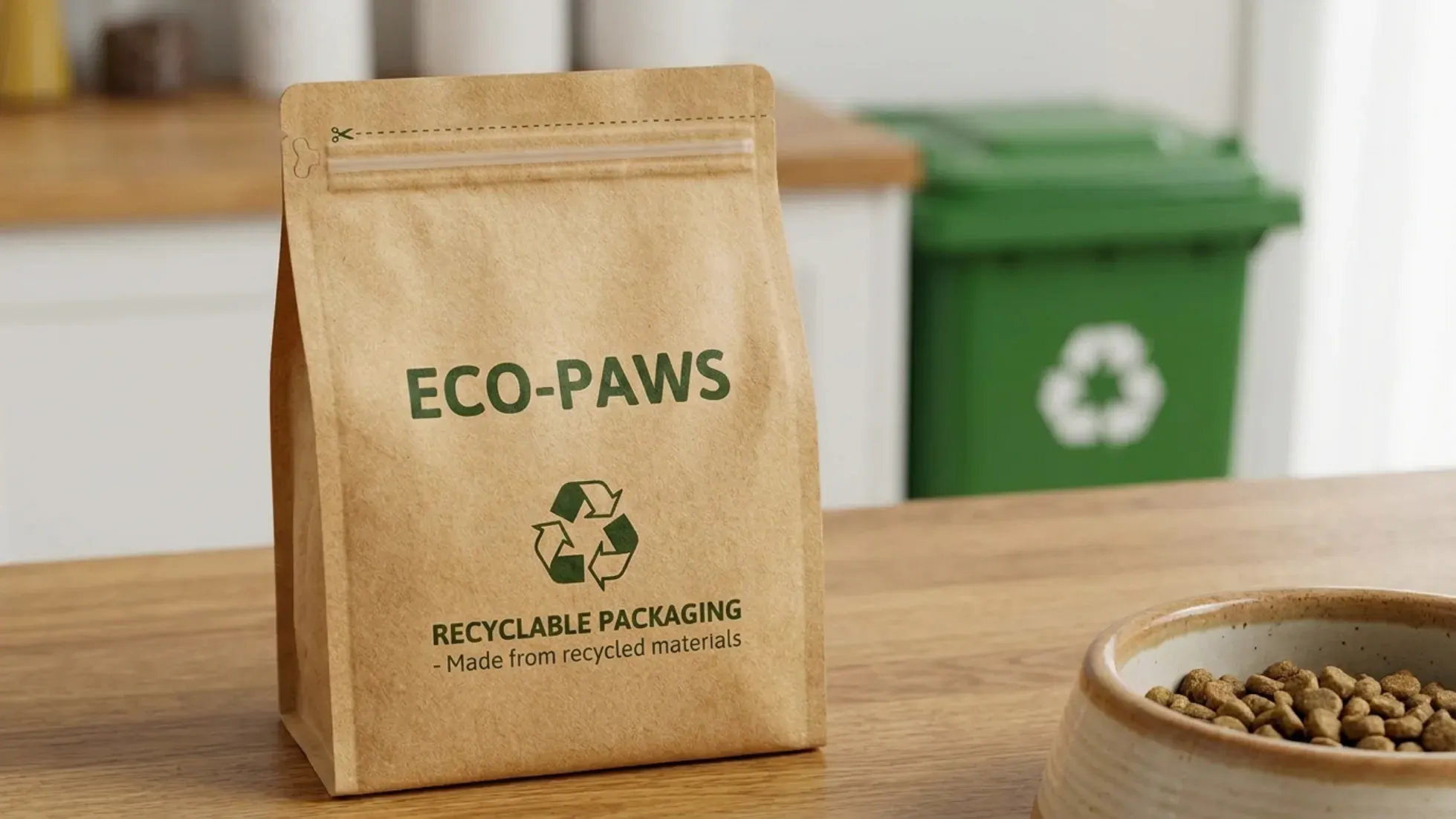
Recyclable Packaging Solutions for Different Pet Food Products
Dry Pet Food
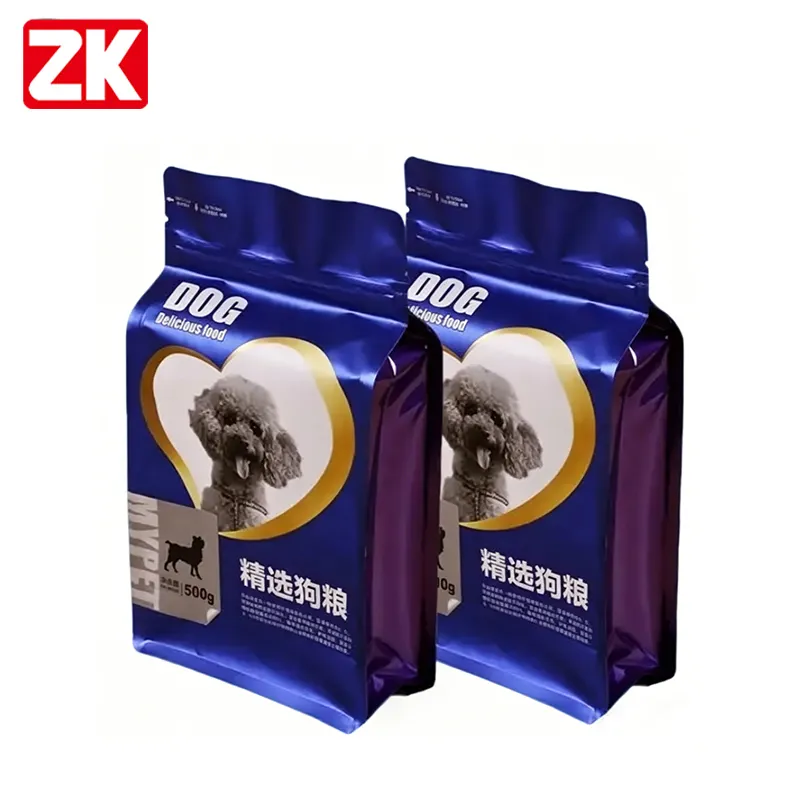
- PE mono-material stand-up pouches
- Compatible with existing recycling streams
- Maintains adequate barrier properties
Pet Treats
- Flexible recyclable pouches
- Light barrier requirements
- Opportunities for eco-friendly labeling
Freeze-Dried Pet Food
- High-barrier mono-material films
- Can use recyclable multi-PE structures
Wet Pet Food and Retort Applications
- PP mono-material pouches or high-barrier recyclable laminates
- Technology is still evolving to match traditional shelf life
Premium and Natural Pet Food Brands
- Sustainability becomes a selling point
- Consumers increasingly demand recyclable packaging solutions
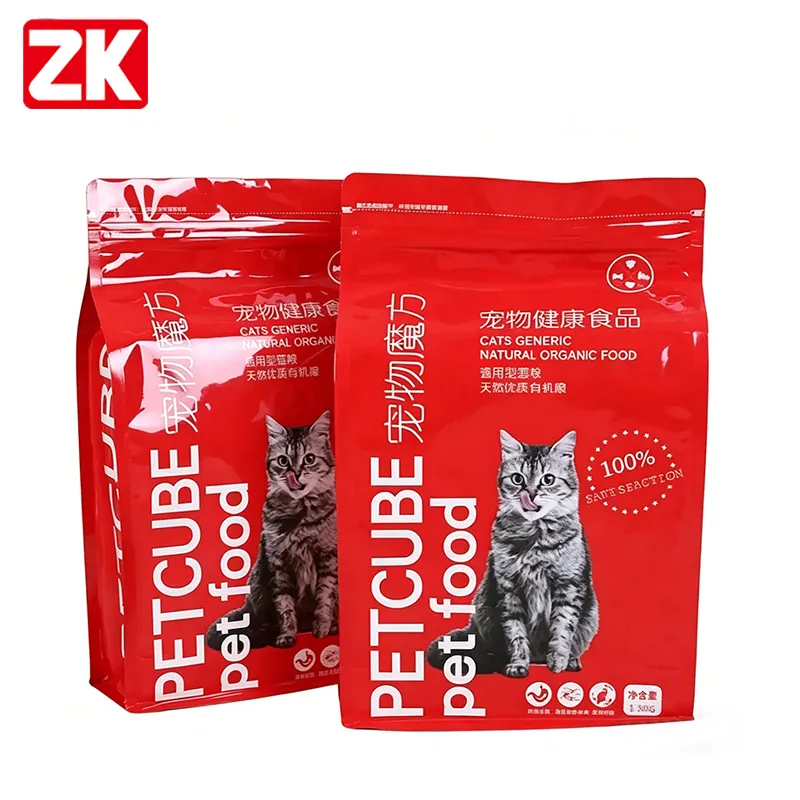
Choosing a Recyclable Pet Food Packaging Supplier
Sustainability Expertise
Ask suppliers about:
- Pet food pouch manufacturer capabilities
- Experience with recyclable flexible packaging
Material Innovation Capabilities
- Availability of mono-material pouches
- High-barrier PE and PP films
Quality Control and Performance Testing
- Ensure food safety compliance
- Maintain the required shelf life
OEM and ODM Development Support
- A custom pet food pouch manufacturer can provide tailored solutions
- A pet food packaging supplier with global export experience can scale production
- Wholesale pet food pouch options for bulk orders
Future Trends in Recyclable Pet Food Packaging
- Mono-material high-barrier films
- Advanced recycling technologies
- Circular economy initiatives
- Growing retailer and consumer demand driving innovation
Conclusion
While most traditional pet food pouches are not widely recyclable, mono-material pouches are emerging as a practical alternative. Brands must balance sustainability, barrier performance, shelf life, and cost. Collaborating with an experienced pet food pouch manufacturer ensures a smooth transition to eco-friendly packaging while maintaining product integrity. As recyclable pet food packaging continues to evolve, early adoption positions brands for both market advantage and environmental responsibility.
About Zhongjia Printing
At Zhongjia Printing, we specialize in high-quality flexible packaging solutions for global brands, importers, wholesalers, and private-label businesses. As an expert flexible packaging manufacturer, we provide stable product quality, reliable production capacity, and competitive factory pricing. Our product range includes recyclable pet food pouches, stand-up pouches, spout pouches, vacuum packaging, and other custom flexible packaging solutions.
With extensive industry experience and a customer-focused approach, we support OEM and ODM projects for flexible packaging, offering customized materials, structures, sizes, printing, and packaging designs to meet specific market requirements. Backed by strict quality control and efficient production management, we ensure consistent performance, food safety compliance, and dependable delivery for every order. Zhongjia Printing is committed to helping B2B customers build stronger brands through innovative, reliable, and cost-effective packaging solutions.
FAQ Section
Are pet food pouches recyclable?
Some are, mainly mono-material pouches, but most multilayer pouches are not compatible with standard recycling.
Why are most pet food pouches difficult to recycle?
They are typically multilayer and contain different polymers, making separation in recycling systems difficult.
What is a mono-material pet food pouch?
A pouch made from a single polymer, like PE or PP, designed for recyclability.
Are recyclable pet food pouches as effective as traditional pouches?
They can maintain barrier performance for dry pet food and treats, but wet pet food solutions are still evolving.
Can wet pet food be packaged in recyclable pouches?
Yes, using PP mono-material pouches or specialized high-barrier PE laminates, but it requires careful design.
What certifications support recyclability claims?
Programs such as RecyClass, APR compatibility guidance, and local recycling standards validate claims.
How can pet food brands improve packaging sustainability?
Simplify materials, adopt mono-material designs, and collaborate with an experienced custom pet food pouch manufacturer.
How do I choose a recyclable pet food packaging supplier?
Evaluate sustainability expertise, material innovation, barrier testing capabilities, and global OEM/ODM support.
