



Elegir bien envases flexibles add-ons depends on your product characteristics, storage requirements, filling process, and customer usage habits. Zippers improve resealability, degassing valves release excess gas, hang holes support retail display, windows showcase products, and spouts make liquid dispensing easier. Embalaje Zhongjia proporciona soluciones personalizadas de envasado flexible utilizando impresión con tinta al agua, serving over 40 well-known companies and exporting to more than 20 countries.
What Are Flexible Packaging Add-Ons and Why Do They Matter?
Flexible packaging add-ons are functional components incorporated into a pouch or bag to improve its usability, product protection, or retail presentation. They go beyond the basic packaging structure by solving specific problems during storage, transportation, display, and everyday use.
Common examples include resealable zippers, one-way degassing valves, hanging holes, transparent windows, and dispensing spouts. Each feature serves a different purpose, so choosing one should start with the actual requirements of the packaged product rather than appearance alone.
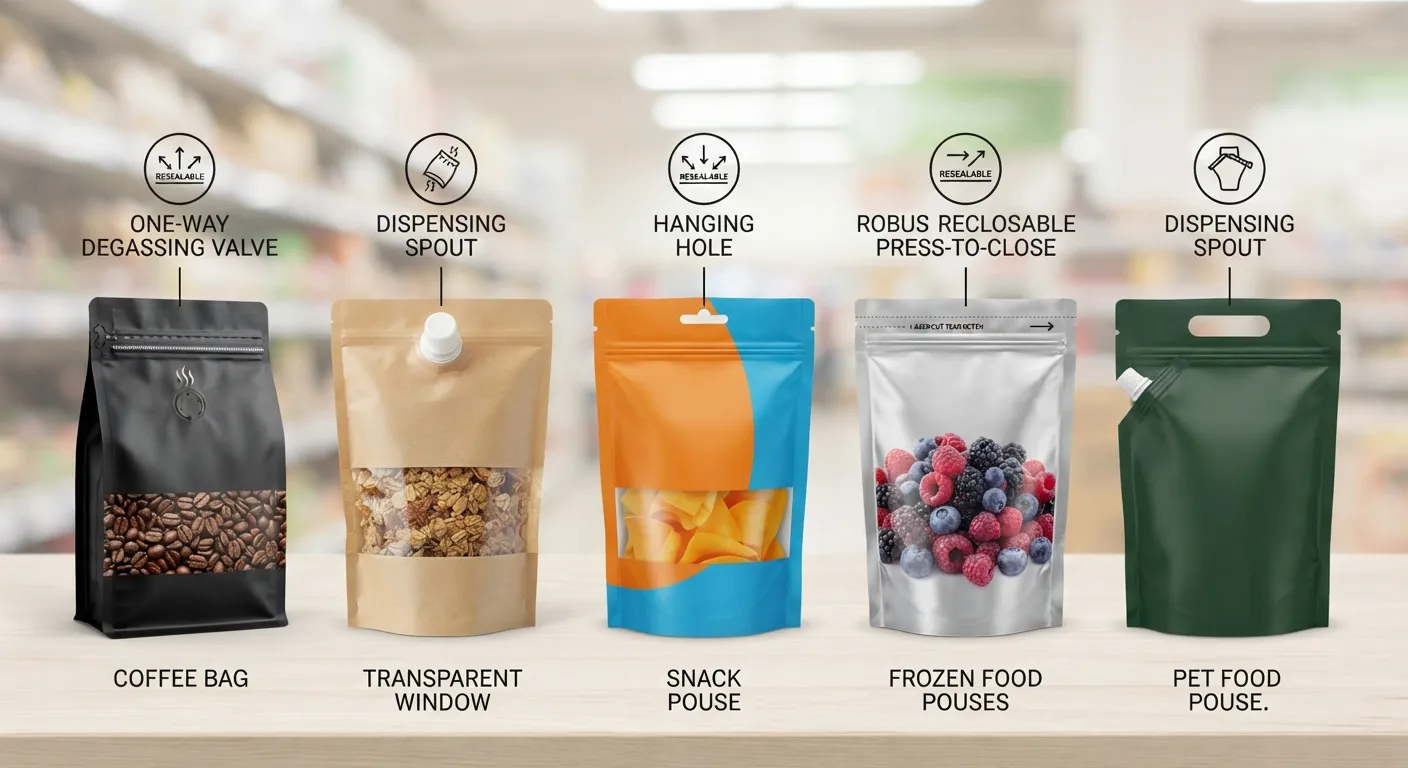
For B2B buyers, these features can create several practical benefits:
- Better product protection: Suitable closures and valves help manage exposure to air and maintain product quality.
- Improved customer experience: Resealable and easy-dispensing designs make products more convenient to use.
- Stronger shelf presentation: Windows and hanging holes help products stand out in retail environments.
- More product differentiation: Functional packaging gives brands additional ways to distinguish their products.
- Greater market flexibility: Customized structures allow one packaging supplier to support different product categories.
However, additional components also affect packaging structure, production procedures, and unit costs. A well-designed package balances functionality with manufacturing feasibility.
Which Five Flexible Packaging Add-Ons Should You Consider?
The five most common options are zippers, degassing valves, hang holes, transparent windows, and spouts. Their applications differ according to product form, storage conditions, and consumer behavior.
1. Zipper: When Do You Need Resealable Packaging?
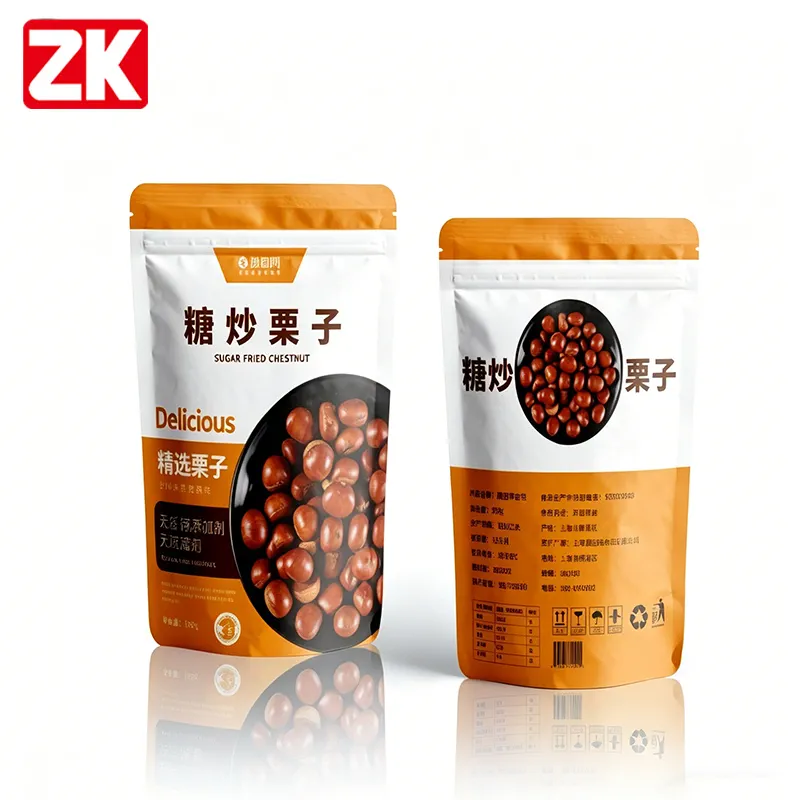
A zipper is suitable for products that consumers use multiple times and need to store after opening. It allows a pouch to be opened and closed repeatedly, reducing exposure to the surrounding environment between uses.
Zipper closures are commonly used for:
- Potato chips and other snacks
- Nuts and dried fruits
- Pet food and pet treats
- Powdered food products
- Household products in resealable pouches

Different zipper structures can be selected according to pouch design and usage requirements. Standard press-to-close zippers are suitable for many everyday applications, while other zipper profiles can provide different opening experiences.
When selecting this option, buyers should evaluate three factors:
- Sealing performance: The zipper should close securely and work consistently throughout repeated use.
- Opening convenience: Consumers should be able to locate and operate the closure without excessive force.
- Position and structure: The zipper must fit the pouch dimensions and leave sufficient space for top sealing and filling operations.
One important point is that a zipper does not replace the initial factory heat seal. Many food packages still require a sealed top section or another tamper-evident opening arrangement before first use.
2. Degassing Valve: Is It Necessary for Coffee Packaging?
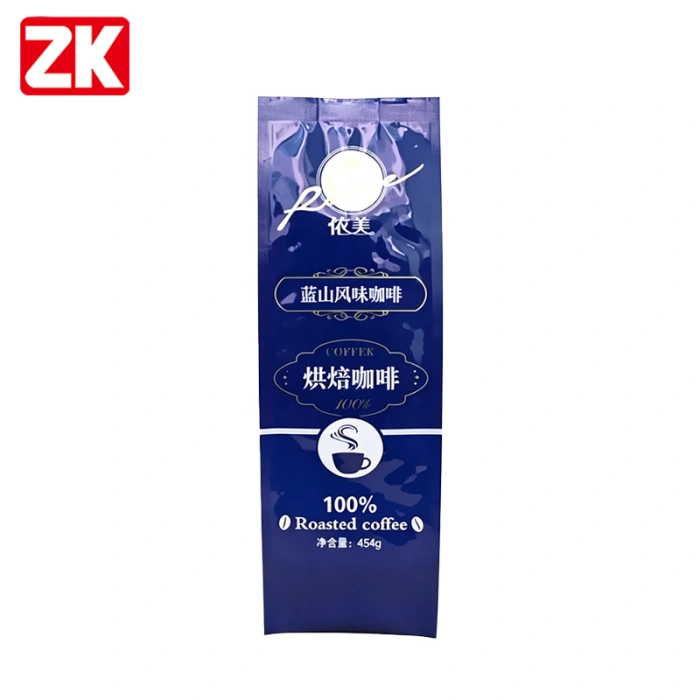
A one-way degassing valve allows gas inside a package to escape while limiting the entry of outside air. It is particularly useful for freshly roasted coffee beans, which release carbon dioxide after roasting.
Without an appropriate gas-release solution, pressure can accumulate inside a sealed coffee pouch. A properly selected valve helps manage this pressure while supporting the protection of the coffee’s aroma and freshness.
Degassing valves are mainly used for:
- Whole coffee beans
- Freshly roasted coffee products
- Certain products that release gas after packaging

Before adding a valve, buyers should consider the following:
- Gas-release requirements: Determine how much gas the packaged product releases and over what period.
- Barrier performance: Select a suitable laminate structure to protect against oxygen and moisture.
- Valve placement: Position the valve according to the pouch design and filling process.
- Sealing reliability: Confirm that the valve-to-film connection is secure and consistent.
A degassing valve is not a standard requirement for every coffee product. Ground coffee, for example, may have different packaging requirements depending on its processing, degassing period, and filling method. The final design should be based on actual product conditions and shelf-life targets.
3. Hang Hole: How Can It Improve Retail Display?
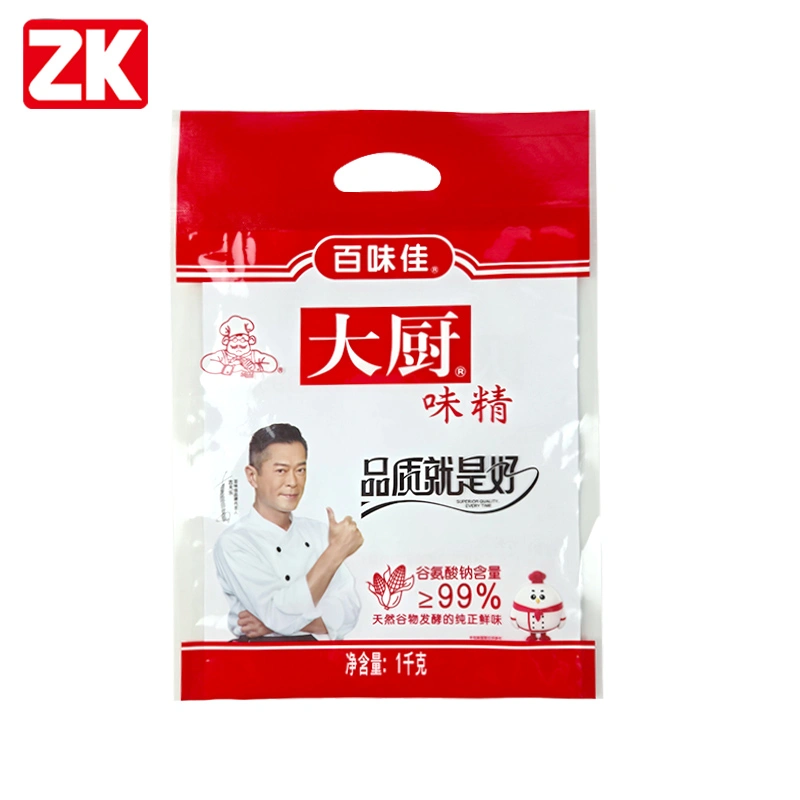
A hang hole is an opening incorporated into a pouch so that retailers can display products on hooks or pegboards. It is particularly useful for lightweight products sold in supermarkets, convenience stores, and specialty retail shops.
Typical applications include:
- Candy and confectionery
- Small snack packages
- Golosinas para mascotas
- Toys and accessories
- Small household products
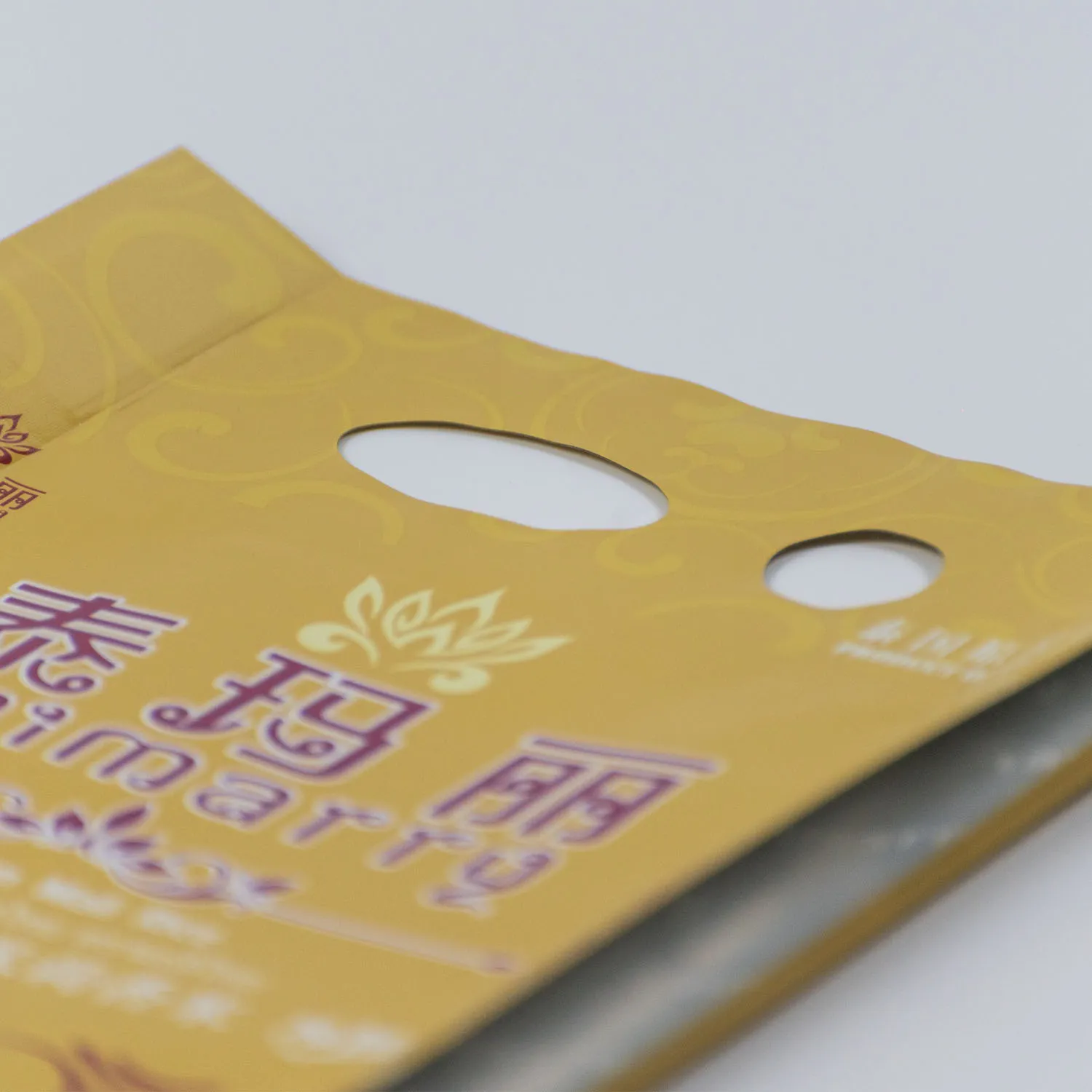
Common designs include round holes, euro slots, and other customized hanging shapes. The choice depends on the retailer’s display system and the package’s dimensions.
When selecting a hang hole, buyers should focus on:
- Product weight: The pouch must withstand the load of the filled product.
- Hole design: The opening should match the intended retail hook or display fixture.
- Structural strength: Adequate material and sealing support are necessary around the hanging area.
- Brand layout: The hole should not interfere with important product information, logos, or printed graphics.
A practical recommendation is to test the filled package under actual hanging conditions before approving mass production. A design that looks suitable on a flat sample may behave differently when carrying a full product load.
4. Transparent Window: When Should You Show the Product Inside?
A transparent window allows consumers to see the packaged product without opening the bag. It works particularly well for products whose appearance, color, texture, or size influences purchasing decisions.
Entre sus aplicaciones más habituales se encuentran:
- Nuts and dried fruits
- Cookies and confectionery
- Golosinas para mascotas
- Snacks and specialty foods
- Selected non-food products
A window can take different shapes and positions, including narrow vertical sections, small viewing areas, and larger customized panels.
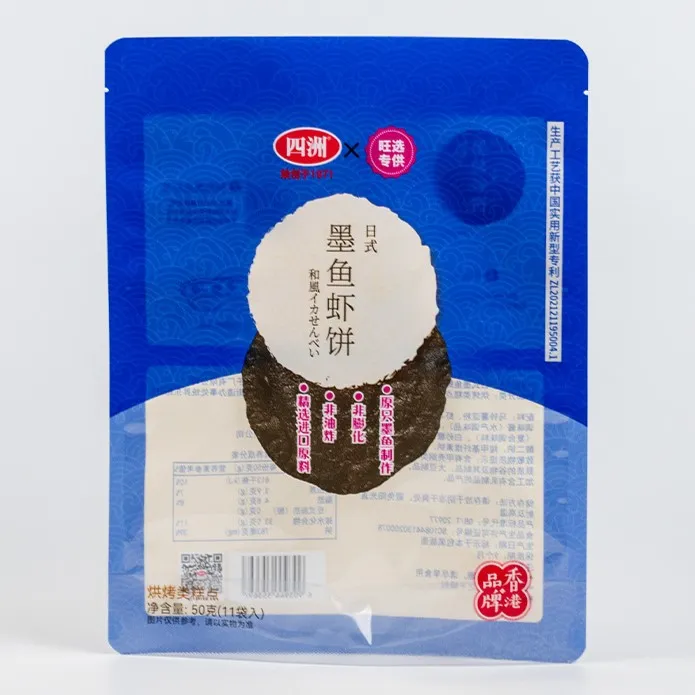
However, visibility should never come at the expense of product protection.
Buyers should consider:
- Window size: Use enough transparent area to show the product clearly without unnecessarily reducing the printed branding area.
- Material compatibility: The transparent film must work with the rest of the laminate structure.
- Barrier requirements: Products sensitive to oxygen, moisture, or light may need a carefully designed window material or a smaller viewing area.
- Visual consistency: The window should be positioned to show the product in its best condition.
This is especially important for food packaging. A transparent window does not automatically provide the same barrier performance as the main packaging laminate. Material selection must account for the product’s storage and shelf-life requirements.
5. Spout: Is a Spout the Right Choice for Liquid Products?
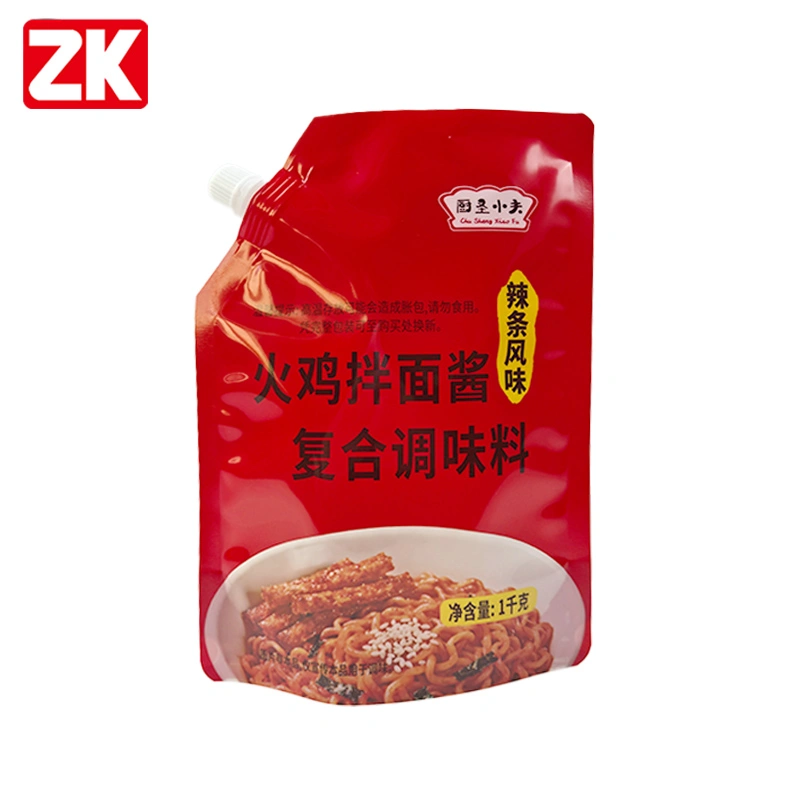
A spout is a dispensing component attached to a pouch, allowing users to pour or squeeze liquids and semi-liquids more conveniently. It is commonly integrated into stand-up pouches and other customized pouch structures.
Typical applications include:
- Tomato sauce and cooking condiments
- Juice and beverage concentrates
- Fruit puree
- Liquid detergents
- Productos de higiene personal
Spout size, position, and design should match the product’s physical properties and intended use.
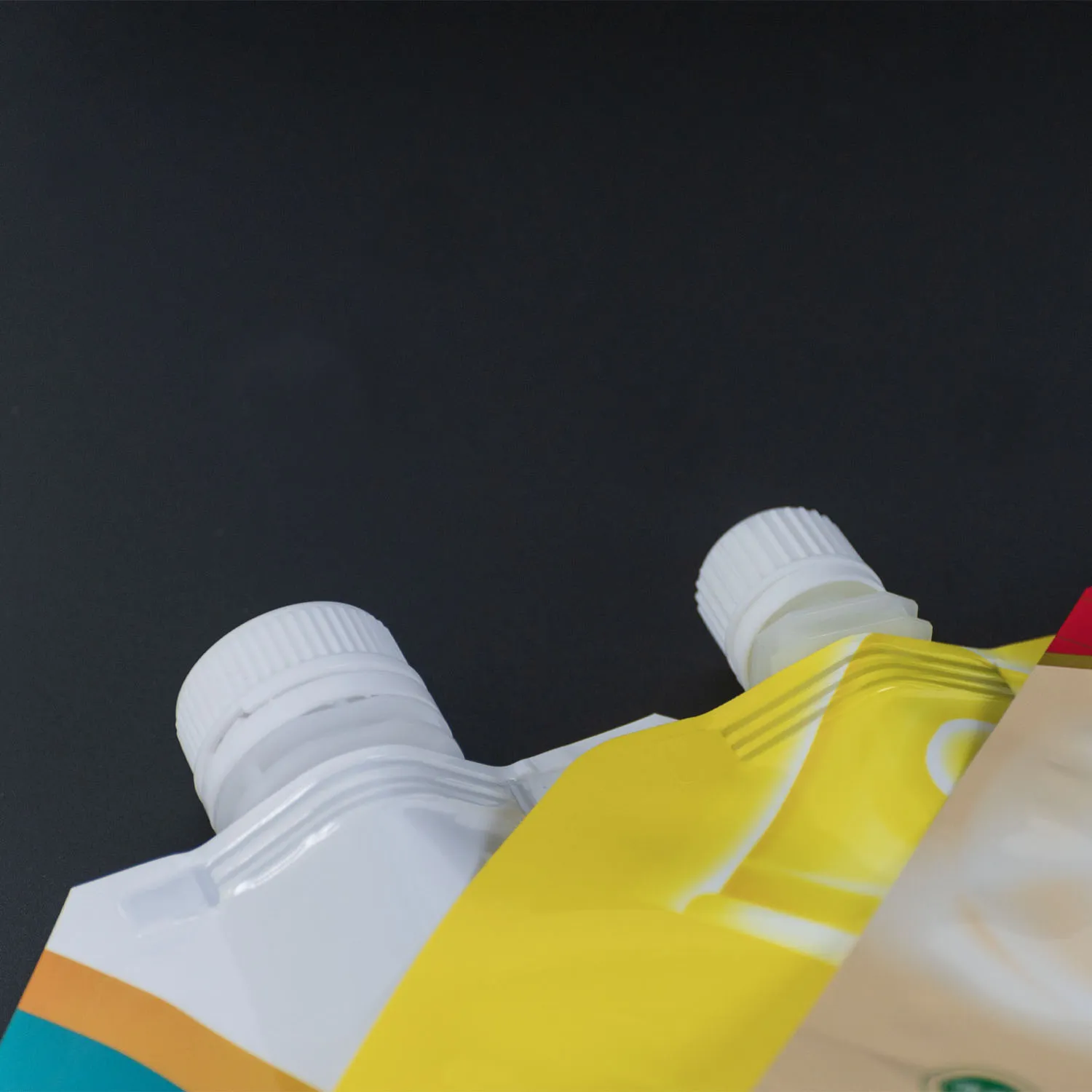
Consider these factors before choosing a spout:
- Product viscosity: Thick sauces require a different dispensing design from thin liquids.
- Particle size: Products containing fruit pieces or other solid particles need an appropriate opening.
- Filling method: The spout position must be compatible with the filling and sealing equipment.
- Leak prevention: The spout and its connection to the pouch must provide reliable sealing.
- Consumer handling: Cap design and opening size should support convenient dispensing.
For products intended for children or single-handed use, ease of opening and controlled dispensing may also influence the design. Actual leakage and transportation tests should be completed before bulk production.
How Do You Compare Different Flexible Packaging Add-Ons?
The easiest way to compare flexible packaging add-ons is to evaluate their main functions, suitable products, and design priorities side by side.
| Add-On | Función principal | Suitable Products | Key Selection Factor |
|---|---|---|---|
| Cremallera | Repeated opening and closing | Snacks, nuts, pet food | Resealing performance |
| Degassing valve | Releases internal gas | Fresh coffee beans | Gas release and barrier protection |
| Agujero de suspensión | Supports retail hanging | Candy, toys, small items | Load-bearing strength |
| Transparent window | Shows the product inside | Dried fruits, snacks | Visibility and barrier performance |
| Caño | Allows controlled dispensing | Sauces, beverages, detergents | Viscosity and opening size |
The most important distinction is that these features solve different problems. A zipper improves post-opening convenience, while a valve manages internal gas pressure. A hang hole supports merchandising, a window improves visibility, and a spout simplifies product dispensing.
Selecting the right flexible packaging add-ons means prioritizing the function that matters most to the product and its target market.
Can You Combine Multiple Flexible Packaging Add-Ons in One Pouch?
Yes. Multiple flexible packaging add-ons can be combined in one pouch when the features are compatible with the packaging structure, filling equipment, and product requirements. Combining features can improve usability, but every additional component needs to be evaluated during the design stage.
Common combinations include:
| Combination | Aplicación típica | Main Benefit |
|---|---|---|
| Zipper + Window | Nuts, dried fruits, snacks | Product visibility and resealability |
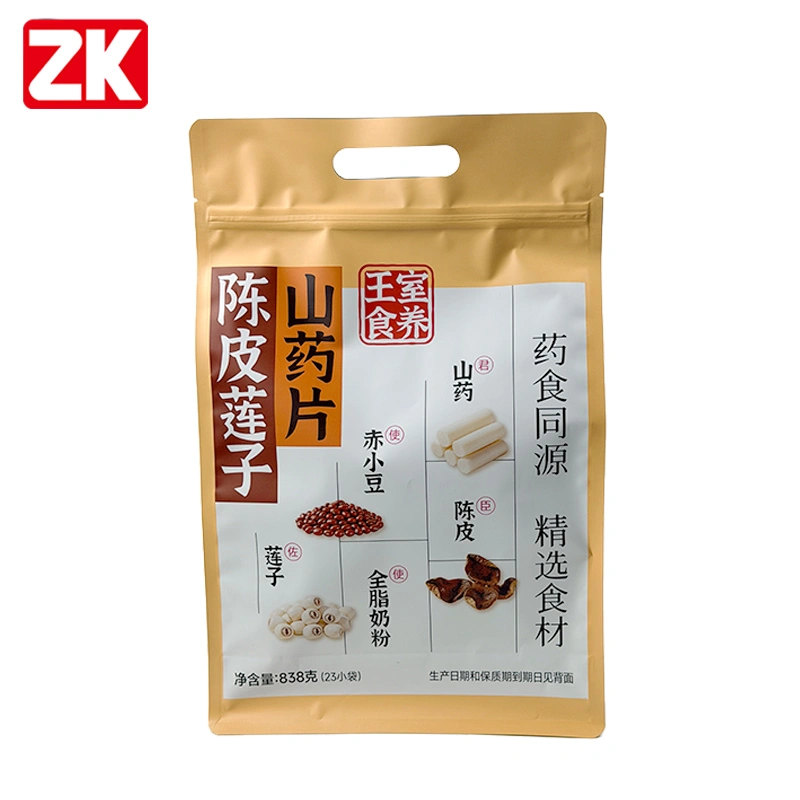
| Hang Hole + Zipper | Candy, pet treats | Convenient retail display and storage |
| Spout + Stand-Up Structure | Sauces, beverages, puree | Stable shelf presentation and easy dispensing |
| Window + Stand-Up Pouch | Specialty food products | Better product visibility |
| Valve + Zipper | Selected coffee products | Gas release and convenient storage after opening |
Not every combination is suitable for every product. For example, a window may need to be reduced or repositioned when the product requires stronger light protection. A zipper and hang hole can work together, but their positions must leave enough space for sealing and hanging strength.
A useful approach is to evaluate the package as a complete system rather than treating each feature as an independent decoration.


How Should You Choose the Right Flexible Packaging Add-Ons?
You should choose flexible packaging add-ons by working backward from the product, filling process, and end-user requirements. This approach helps prevent unnecessary features and reduces the risk of costly packaging modifications after production begins.
Follow these five steps when developing a custom packaging project.
Step 1: Identify Your Product Characteristics
Start with the product’s physical form and storage requirements. Is it a dry snack, powder, coffee bean, liquid, or semi-liquid? Does it release gas, absorb moisture, or require protection from oxygen and light?
These characteristics determine whether you need a zipper, valve, window, spout, or another functional feature.
Step 2: Understand How Customers Use the Product
Consider whether customers consume the product in one sitting or over several days. Products used repeatedly benefit from resealable closures, while sauces and beverages need convenient dispensing options.
For retail products, shelf visibility and hanging requirements also influence the decision.
Step 3: Check Compatibility With the Packaging Structure
Different flexible packaging add-ons require different installation positions and sealing arrangements. A zipper needs sufficient space along the opening, while a spout requires a secure connection to the pouch film.
The chosen feature must also work with the laminate material, pouch dimensions, and overall structural design.
Step 4: Confirm Filling and Production Requirements
Discuss your filling equipment, sealing temperature, production speed, and packaging orientation with the manufacturer. A design that works for manual filling may not be suitable for an automated production line.
This step is particularly important for spouts, valves, and resealable closures.
Step 5: Test Samples Before Bulk Production
Request samples and evaluate them under realistic conditions. Test zipper opening and closing, valve performance, hanging strength, window clarity, and spout leakage.
For food products, conduct suitable sealing, barrier, and product-compatibility tests according to the intended application. Approve the final structure before confirming a large production order.
What Should B2B Buyers Know About Packaging Costs and Sustainability?
The cost of flexible packaging add-ons depends on component type, material, pouch dimensions, production volume, and manufacturing complexity. Adding a feature can increase the unit price, but selecting the right feature can also improve product usability and retail performance.
For wholesalers, importers, and private-label brands, the purchasing decision should consider the total value of the finished package rather than the component price alone.
The following factors influence quotations:
- Component specifications: Zipper profiles, valve types, spout sizes, and customized window shapes have different material and processing requirements.
- Packaging materials: Barrier films and specialized transparent materials affect the total structure cost.
- Pouch dimensions: Larger bags generally require more material and may need stronger structural support.
- Production volume: Order quantity affects material purchasing, setup costs, and manufacturing efficiency.
- Printing requirements: Artwork complexity, printing colors, and finishing options influence production planning.
Sustainability is another important purchasing consideration. According to Eurostat’s Packaging Waste Statistics, the EU generated 81.5 million tonnes of packaging waste in 2024, with plastic packaging accounting for 19.9% of the total.
This figure highlights why packaging design should consider material efficiency, product protection, and end-of-life requirements together. Adding more components is not automatically a sustainable choice. Buyers should select only the functions that provide real value and investigate whether the complete packaging structure meets the recycling requirements of the target market.
Printing technology also matters. Embalaje Zhongjia uses impresión con tinta al agua for its flexible packaging products. Compared with conventional solvent-based printing systems, appropriately formulated water-based inks can reduce solvent-related emissions. The US Environmental Protection Agency (EPA) explains that printing emissions are primarily associated with the evaporation of organic solvents contained in inks, while some water-based inks produce no such emissions.
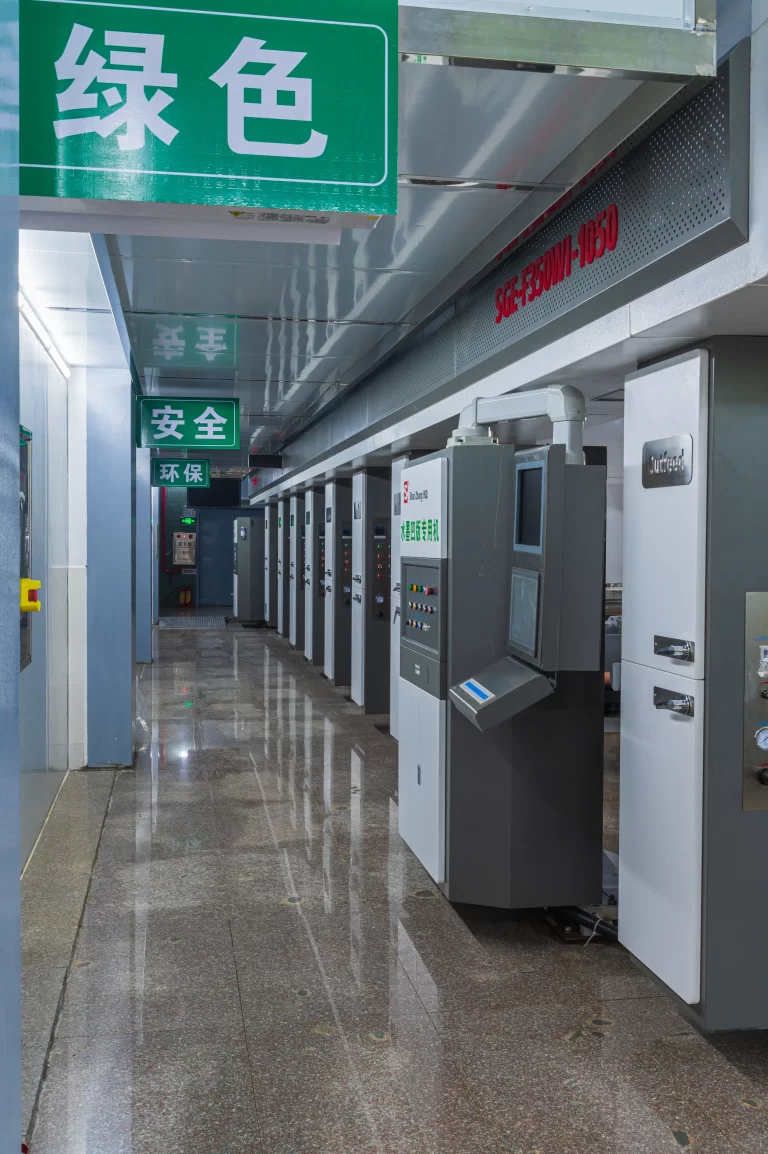
Impresión con tinta al agua is one part of a broader environmental strategy. Actual environmental performance also depends on ink formulation, drying energy, substrates, adhesives, and waste management. Buyers should assess the complete packaging solution rather than relying on a printing method alone.
Por qué elegir Embalaje Zhongjia for Custom Flexible Packaging Add-Ons?
Embalaje Zhongjia provides customized flexible packaging solutions for food, daily necessities, and toy products. With experience serving more than 40 well-known companies and exporting to over 20 countries, the company understands the importance of combining functional packaging design with stable manufacturing quality.
Our manufacturing capabilities include:
- Impresión con tinta a base de agua: Supporting environmentally conscious printing solutions with attention to print quality and production consistency.
- Four high-speed production lines: Supporting efficient manufacturing for different packaging requirements.
- Multiple pouch structures: Including stand-up pouches, flat-bottom bags, spout pouches, zipper bags, and other customized formats.
- Functional customization: Offering zippers, degassing valves, hang holes, transparent windows, spouts, and other packaging features.
- Quality management and laboratory testing: Helping maintain stable product quality through production controls and product inspections.
When developing flexible packaging add-ons, our team considers product characteristics, packaging materials, structural design, and filling requirements to help customers select practical solutions.
Whether you are launching a new snack brand, sourcing coffee packaging, developing liquid product pouches, or purchasing customized packaging in bulk, Embalaje Zhongjia can support your project from design confirmation to finished bag production.

Preguntas frecuentes
1. Which packaging add-on is best for food products?
The best option depends on the food’s characteristics. Zippers are suitable for snacks and nuts, degassing valves are commonly used for freshly roasted coffee beans, windows work well for visible products such as dried fruits, and spouts are useful for sauces and beverages.
2. Can I combine a zipper and a transparent window?
Yes. A zipper and window can be incorporated into the same pouch. The window position, zipper placement, and laminate structure must be coordinated to maintain adequate sealing performance and product protection.
3. Does adding a spout or valve increase packaging costs?
Yes. Spouts and valves introduce additional components and manufacturing steps, which can increase unit costs. The final quotation depends on component specifications, pouch dimensions, material selection, and order quantity.
4. Are flexible packaging add-ons suitable for all pouch types?
No. Compatibility depends on the pouch structure, dimensions, materials, and production process. A manufacturer should review the proposed design before confirming the final configuration.
5. Can water-based ink be used for customized flexible packaging?
Yes. Water-based ink printing can be used for suitable flexible packaging substrates and printing processes. Ink formulation, substrate treatment, drying conditions, and adhesion requirements must be evaluated to achieve reliable printing quality.
6. What information should I provide when requesting a custom packaging quotation?
Provide your product type, packaging dimensions, estimated order quantity, preferred pouch structure, material requirements, printing artwork, and desired functional features. Filling method and storage requirements are also useful when determining the appropriate packaging design.
Conclusión
Choosing the right flexible packaging add-ons is about finding the balance between product protection, consumer convenience, retail presentation, and manufacturing cost. Zippers, degassing valves, hang holes, transparent windows, and spouts each serve different purposes, and the best choice depends on your product and its intended market.
Embalaje Zhongjia es un fabricante profesional de envases flexibles especializada en impresión con tinta al agua. Serving more than 40 well-known companies and exporting to over 20 countries, we offer customized bolsas autoportantes, flat-bottom bags, bolsas de caño, zipper bags, and other flexible packaging solutions. Equipped with four high-speed production lines and supported by strict quality management and laboratory testing, we are committed to delivering reliable packaging for global buyers.
Póngase en contacto con Embalaje Zhongjia today to discuss your packaging requirements, request samples, and get a customized quotation for your next project.
