



Adding a hang hole function on the packaging of your products is more than just a visual appeal, but an engineering question. A poor hole design or wrong laminate can lead to torn bags on peg hooks, skewed shelf presentation, and costly returns.
Here, Embalaje Zhongjia, an fabricante experto en envases flexibles, explains what buyers must consider when specifying hang hole packaging for snacks, candy, and other small retail items.
What Is Hang Hole Packaging?
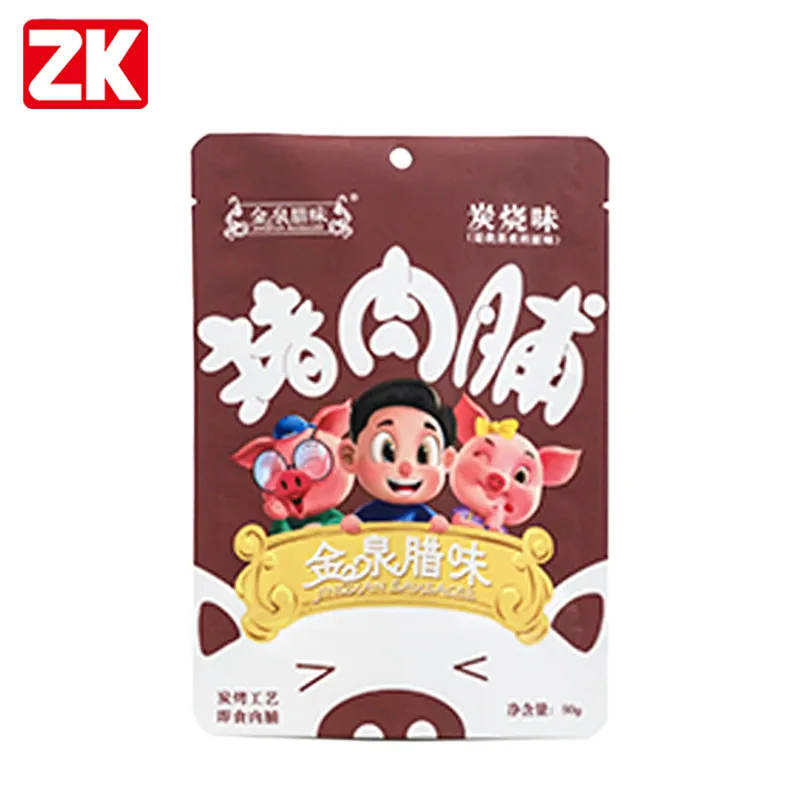
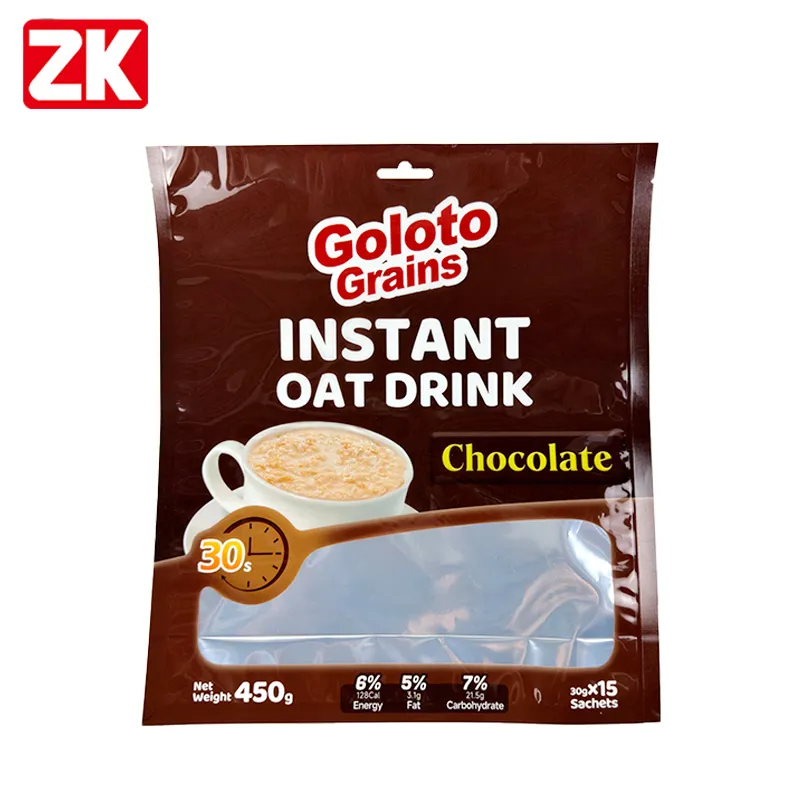
Hang hole packaging refers to pouches or bags with a punched opening for peg-hook display. Common hole types include round punches, half-moon punches, and the Euro hole. Pouches can be flat, gusseted, or stand-up; the hole type and placement determine load transfer from hook → bag → seal.
Universal Core Performance Requirements for Hang Hole Packaging Bags
All hanging packaging bag solutions must meet a few basic engineering criteria:
- Load-bearing strength: the bag must hold its filled weight without tearing.
- Seal integrity: seals must survive hanging, handling, and transport.
- Punch precision: hole position tolerance affects alignment and sealing.
- Transport resilience: the bag must resist drop, vibration, and compression.
- Line compatibility: the punching process must not disturb the sealing or print registration.
Brief suppliers with these as mechanical specs, not design suggestions.
Snack Hang Hole Packaging Requirements
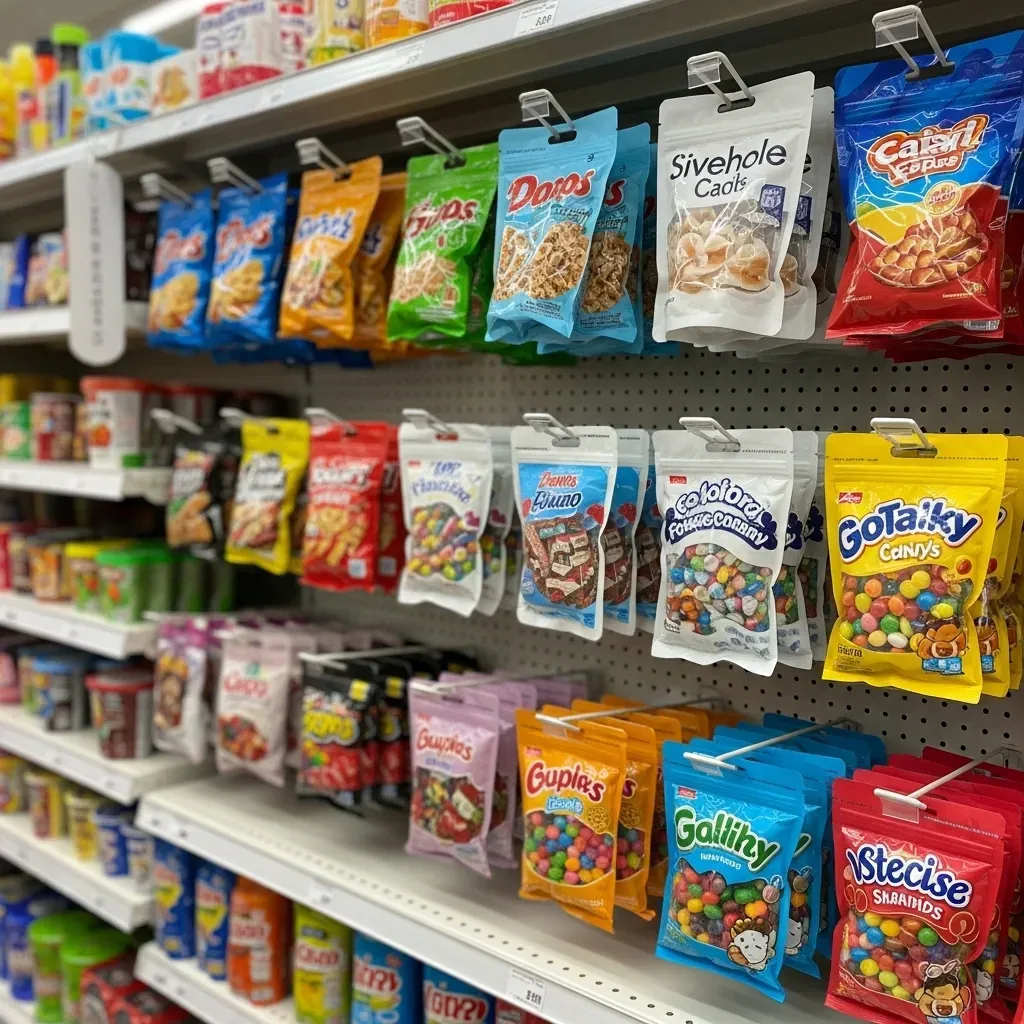
Snacks (chips, nuts, granola) create specific demands:
- Typical risks: oil/fat can contaminate seal areas; bulky shapes create uneven load.
- Material needs: grease-resistant laminates (e.g., PET/PE or PET/VMPET/PE) preserve shelf life and reduce seal weakening.
- Structural needs: stiffer back layers or a folded header improve shelf-facing rigidity.
- Practical fixes: wider seal bands, local lamination thickening, or a reinforcement patch above the hole.
For lightweight, high-volume snack SKUs, a centered round punch with modest reinforcement often works. For larger family packs, choose Euro slots or add a header for strength.
Candy Hang Hole Packaging Requirements
Candy spans hard candy, gummies, and chocolate — each has different packaging priorities:
- Moisture sensitivity: Many candies need low MVTR films to prevent stickiness.
- Puncture risk: hard pieces can puncture thin films; choose puncture-resistant layers (NY or thicker PET).
- Aesthetics vs function: Candy often needs high-gloss printing or windows; ensure decorative layers don’t weaken the punch area.
- Temperature sensitivity: chocolate needs stability in warm logistics; thicker backings or foil options help.
For candy, a Euro hole or reinforced round hole reduces tear risk and supports longer displays without visual degradation.
Small Retail Items (Hardware, Toys, Accessories)
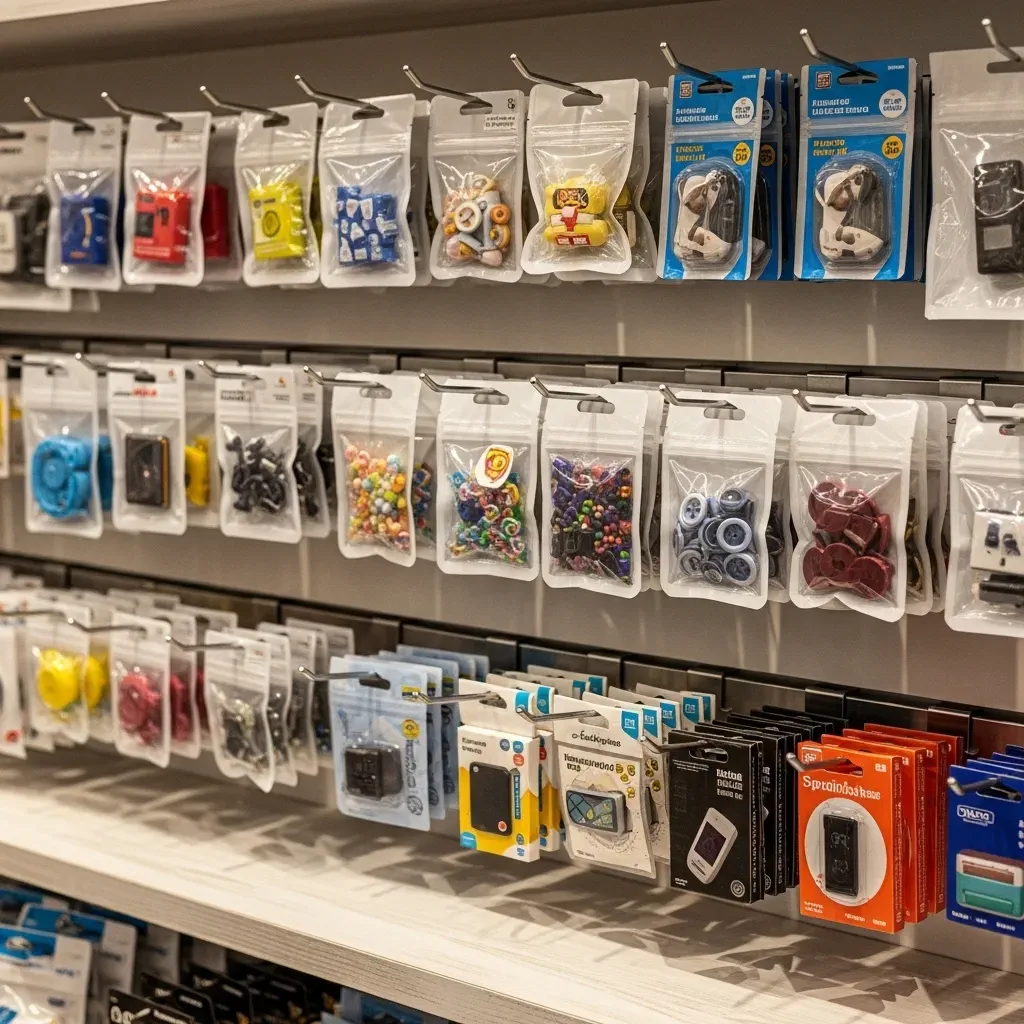
Small retail items often present the highest mechanical stress:
- Sharp edges and weight: these increase puncture and tear risk.
- Frequent handling: customers pick up and re-hang items repeatedly.
- Demand for durability: choose robust laminates (PET/PE, NY/PE) and reinforced headers.
For heavy or sharp items, always specify Euro slots plus a reinforced header or a bonded cardboard header to distribute the load.
Quick Selection Table
| Tipo de producto | Typical Weight | Recommended hang hole packaging |
|---|---|---|
| Small snacks/samples | <50 g | Round punch; optional reinforcement |
| Single-serve condiments/candy | 50–150 g | Round or half-moon + patch |
| Mid-weight foods/ oys | 150–500 g | Euro slot (dual-contact) |
| Heavy/sharp items | >500 g | Euro hole + reinforced header or card |
Production & Cost Implications
A few production realities buyers must budget for:
- Die-cut tooling: Euro slots and reinforced headers add tooling complexity.
- Line speed impacts: punching at high speed can distort thin webs and affect seals — some lines require slower indexing.
- Reinforcement adds cost and MOQ: patches, thicker laminates, or headers increase material and setup costs.
- Automation compatibility: ensure your converter’s punching station is integrated without compromising registration or sealing.
Ask suppliers to break out these costs in the quote: die, patch material, extra web handling, and any speed-based machine time.
Testing & QC Checklist
Require the following tests before approval:
- Hanging tensile/pull-to-failure (single and repeated cycles).
- Fatigue test (e.g., 200 re-hang cycles).
- Drop and stack tests to simulate transit and retail shelving.
- Seal strength (ASTM F88 or equivalent).
- Puncture resistance for sharp-content SKUs.
- Visual inspection for hole location tolerance and web distortion.
Demand documented results from pilot runs on the intended production line.
How to Brief Your Packaging Supplier
Provide a clear, mechanical brief — not a mood board. Minimum data:
- Product net weight and gross weight.
- Expected display duration and handling frequency.
- Hook type (wire hook, pegboard) and hook diameter if known.
- Desired bag type (stand-up/gusseted/flat) and any windows or zippers.
- Whether reinforcement patches or headers are acceptable.
- Acceptance tests are required before mass production.
Require sample videos of pilot runs and pouches on hooks. Make pilot approval a contractual milestone.

Conclusión
Hang hole packaging is a small design choice with big operational consequences. Match hole type and reinforcement to product weight, fragility, and display life. Brief suppliers with mechanical specs, demand pilot-run data, and budget for the modest extra cost of reinforcement where needed. Do this, and you’ll avoid torn bags on the peg, fewer returns, and a cleaner retail presence — which is what good packaging engineering is all about.