



Bei der Gestaltung von Kaffeeverpackungen geht es um weit mehr als nur um ansprechende Grafiken. Eine gut gestaltete Kaffeeverpackung muss die Frische des Produkts gewährleisten, eine effiziente Produktion ermöglichen, den Vorschriften für Lebensmittelverpackungen entsprechen und Ihre Marke den Verbrauchern wirkungsvoll vermitteln.
Aus einem ’Hersteller von Kaffeeverpackungen“Aus dieser Perspektive beginnt eine erfolgreiche Verpackung damit, das Produkt selbst zu verstehen. Entscheidungen über die Beutelstruktur, Barrierewerkstoffe, funktionale Merkmale und Druckverfahren wirken sich alle auf die endgültige Leistungsfähigkeit der Verpackung aus. Die Wahl des falschen Materials oder Beutelmodells kann die Haltbarkeit verkürzen, die Produktionskosten erhöhen oder die Effizienz an der Abfüllanlage verringern.
Legen Sie Ihre Verpackungsanforderungen fest, bevor Sie mit der Gestaltung beginnen
Bevor Sie Farben, Grafiken oder Oberflächenausführungen auswählen, sollten Sie die funktionalen Anforderungen Ihrer Verpackung festlegen. Diese Entscheidungen bestimmen, welche Materialien, Strukturen und Herstellungsverfahren geeignet sind.
Bestimmen Sie Ihr Kaffeeprodukt
Die Art des Kaffees, den Sie verkaufen, hat den größten Einfluss auf die Gestaltung der Verpackung.
Zu den gängigen Produkten gehören:
- Kaffee in ganzen Bohnen
- Gemahlener Kaffee
- Instantkaffee
- Filterkaffee-Beutel
- Kaffeekapseln (Sekundärverpackung)
Jedes Produkt hat unterschiedliche Verpackungsanforderungen.
Beispielsweise setzen frisch geröstete ganze Bohnen nach dem Rösten kontinuierlich Kohlendioxid frei, wodurch Einweg-Entgasungsventile unverzichtbar. Instantkaffee hingegen benötigt zwar keine Gasfreisetzungsfunktion, erfordert aber dennoch einen hervorragenden Feuchtigkeitsschutz.
Wenn Sie die Eigenschaften Ihres Produkts kennen, können Sie Hersteller von Kaffeebeuteln um die am besten geeignete Verpackungslösung zu empfehlen.
Festlegung der Anforderungen an die Haltbarkeit
Ein weiterer wichtiger Aspekt ist, wie lange das Produkt frisch bleiben muss.
Stellen Sie Fragen wie zum Beispiel:
- Wird der Kaffee innerhalb von drei Monaten verkauft?
- Ist eine Haltbarkeit von 12 oder 18 Monaten erforderlich?
- Wird das Produkt ins Ausland exportiert?
- Wird es längere Zeit in Lagerhallen oder Versandcontainern gelagert?
Um eine längere Haltbarkeit zu gewährleisten, sind in der Regel leistungsfähigere Barriereverpackungsmaterialien erforderlich, die den Eintrag von Sauerstoff, Feuchtigkeit und Lichteinwirkung reduzieren.
Die Auswahl eines Materials allein aufgrund der Kosten kann zu einem vorzeitigen Geschmacksverlust oder einer Qualitätsminderung des Produkts führen.
Wählen Sie die richtige Struktur für Ihren Kaffeebeutel
Die Wahl des passenden Beuteltyps ist eine der wichtigsten Entscheidungen beim Design von Kaffeeverpackungen. Verschiedene Strukturen bieten unterschiedliche Vorteile hinsichtlich Optik, Lagerung, Abfüllleistung und Möglichkeiten zur Markenpräsentation.
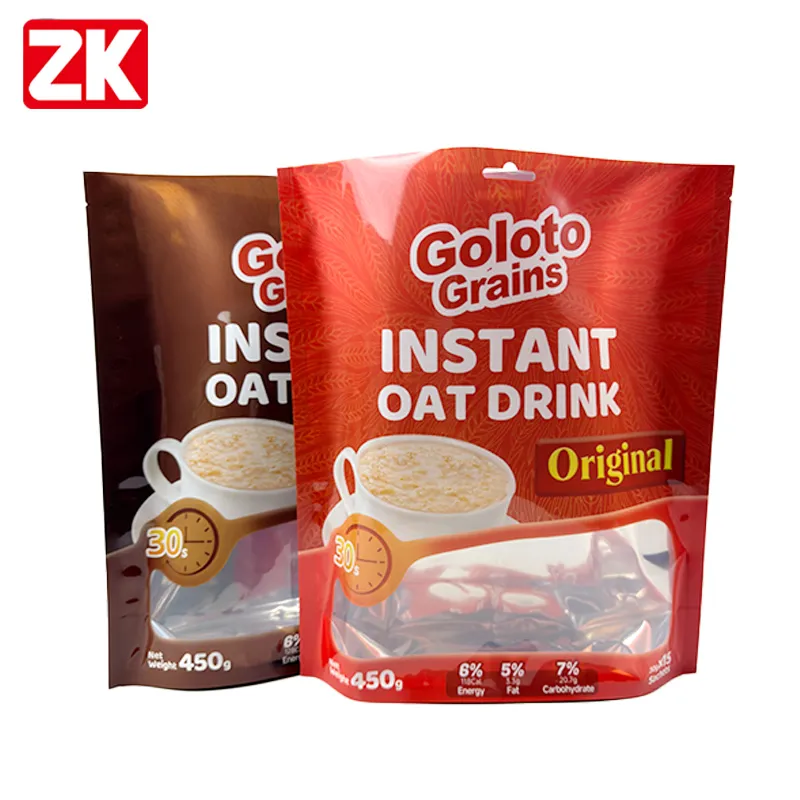
Standbeutel
Standbeutel haben sich zu einer der beliebtesten Verpackungsformen für modernen Kaffee entwickelt.
Zu den Vorteilen gehören:
- Hervorragende Regalpräsentation
- Effiziente Nutzung von Verkaufsflächen
- Große bedruckbare Fläche
- Geeignet für wiederverschließbare Reißverschlüsse und Entgasungsventile
- In einer großen Auswahl an Größen erhältlich
Sie werden häufig von Spezialitätenkaffee-Marken, Start-ups und im Premium-Einzelhandel eingesetzt.
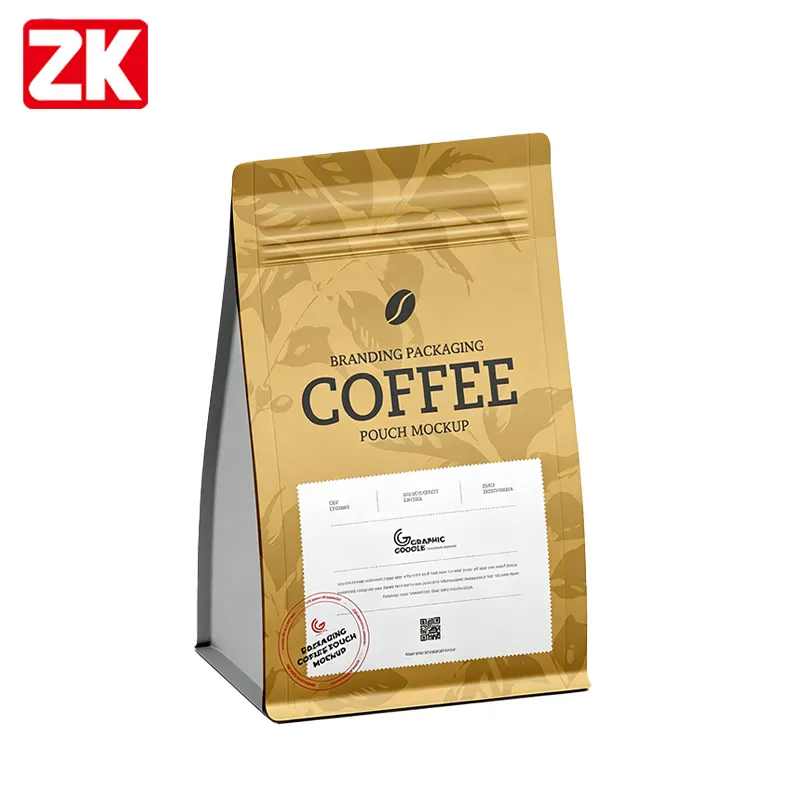
Flachboden-Kaffeesäcke
Beutel mit flachem Boden gelten allgemein als eine der hochwertigsten Verpackungsformen für Kaffee.
Ihr kastenförmiger Sockel bietet:
- Hervorragende Haltbarkeit
- Größere bedruckbare Platten
- Hochwertige Optik
- Höhere Füllleistung
Aufgrund ihrer stabilen Konstruktion und ihrer ansprechenden Optik werden Flachbodenbeutel häufig für hochwertigen Röstkaffee verwendet.
Obwohl die Herstellungskosten in der Regel höher sind als bei Standbeuteln, halten viele Marken die verbesserte Präsentation für lohnenswert.
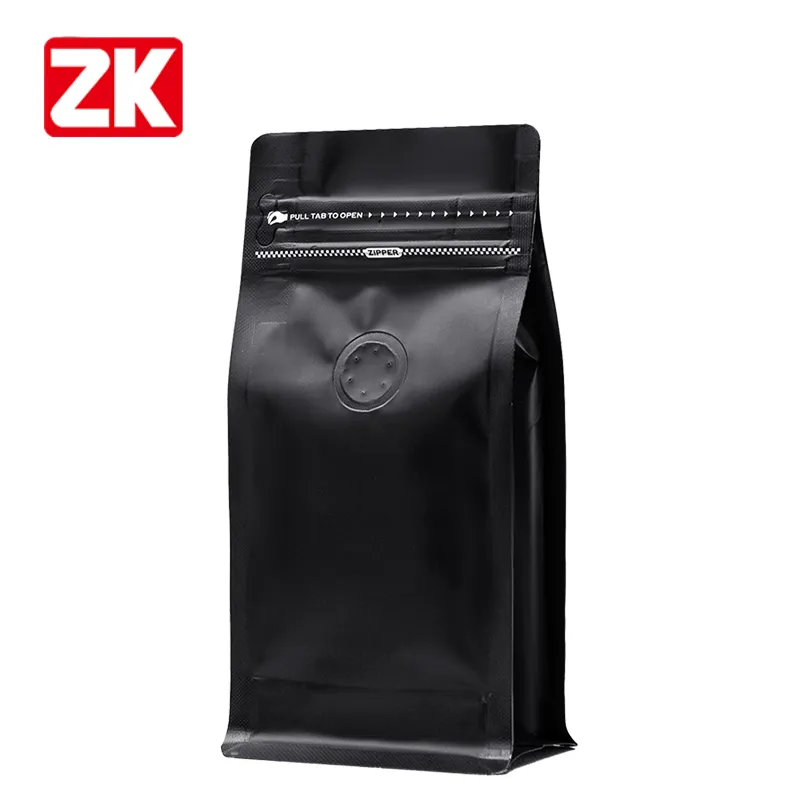
Beutel mit Vierfachversiegelung
Beutel mit Vierfachversiegelung verfügen über vier versiegelte Ecken, wodurch eine stabile Verpackung entsteht, die nach dem Befüllen aufrecht steht.
Zu den Vorteilen gehören:
- Verbesserte Verpackungsfestigkeit
- Bessere Gewichtsverteilung
- Hochwertiges Erscheinungsbild im Einzelhandel
- Größere bedruckbare Fläche als bei herkömmlichen Seitenfaltenbeuteln
Diese Beutel erfreuen sich als Verpackungen für Premium-Kaffee und für den Export zunehmender Beliebtheit.
Vergleich der Strukturen von Kaffeeverpackungen
| Tasche Typ | Regalattraktivität | Füllgrad | Kapazität | Am besten für |
|---|---|---|---|---|
| Stand Up Pouch | Ausgezeichnet | Hoch | Klein bis mittel | Kaffeemarken im Einzelhandel |
| Beutel mit flachem Boden | Prämie | Hoch | Mittel bis groß | Gebrannter Premium-Kaffee |
| Beutel mit vierfacher Versiegelung | Ausgezeichnet | Hoch | Mittel bis groß | Premium- und Exportmärkte |
Es gibt keine allgemein “beste” Kaffeeverpackung. Die ideale Gestaltung hängt von Ihrem Produkt, Ihrem Produktionsprozess, Ihrem Zielmarkt und Ihren Marken-Zielen ab.
Wählen Sie die richtigen Verpackungsmaterialien aus
Kaffee reagiert äußerst empfindlich auf Sauerstoff, Feuchtigkeit, Licht und Aromaverlust. Die Auswahl geeigneter Verpackungsmaterialien für Kaffee ist daher entscheidend, um die Frische während der gesamten Haltbarkeitsdauer des Produkts zu gewährleisten.
Gängige Strukturen von Verpackungsmaterialien für Kaffee
Unterschiedliche Materialkombinationen bieten unterschiedliche Schutzniveaus und sind mit unterschiedlichen Kosten verbunden.
PET/PE
Eine gängige zweischichtige Struktur, die sich für Produkte mit moderaten Anforderungen an die Haltbarkeit eignet.
Vorteile:
- Kostengünstig
- Gute Bedruckbarkeit
- Zuverlässiges Heißsiegeln
PET/AL/PE
Enthält eine Aluminiumfolienschicht für hervorragende Barriereeigenschaften.
Zu den Vorteilen gehören:
- Hervorragender Schutz vor Sauerstoff
- Ausgezeichnete Feuchtigkeitsbeständigkeit
- Hervorragende Aromabeständigkeit
Wird häufig für hochwertig gerösteten Kaffee empfohlen, der für eine längere Lagerung oder den Export bestimmt ist.
PET/VMPET/PE
Verwendet metallisiertes PET anstelle von Aluminiumfolie.
Zu den Vorteilen gehören:
- Hohe Barrierewirkung
- Günstiger als Folienlaminate
- Ansprechende Metalloptik
Diese Konstruktion bietet ein gutes Gleichgewicht zwischen Leistung und Erschwinglichkeit.
Kraftpapier + Barrierefolie
Verbindet das natürliche Aussehen von Kraftpapier mit einer inneren Hochbarrierefolie.
Diese Option ist bei Spezialitätenkaffee-Marken beliebt, die ein eher handwerkliches Image anstreben und gleichzeitig den Produktschutz gewährleisten möchten.
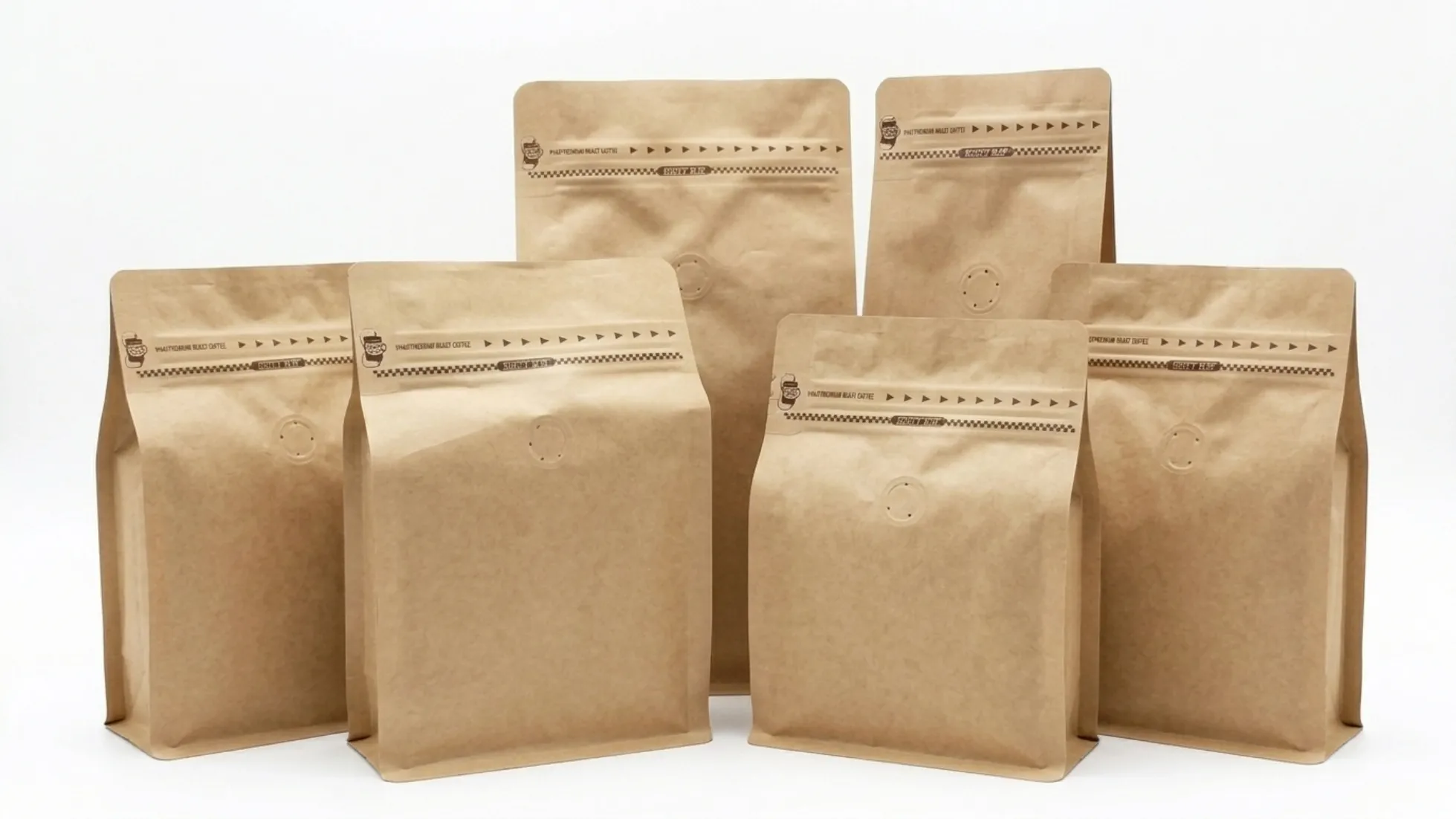
Funktionale Merkmale hinzufügen, die die Kaffeeverpackung verbessern
Sobald die Struktur und das Material der Verpackung festgelegt sind, besteht der nächste Schritt darin, die funktionalen Merkmale auszuwählen, die sowohl die Produktleistung als auch das Verbrauchererlebnis verbessern. Auch wenn diese Merkmale auf den ersten Blick unbedeutend erscheinen mögen, können sie doch erhebliche Auswirkungen auf die Frische, die Benutzerfreundlichkeit und die Produktionseffizienz haben.
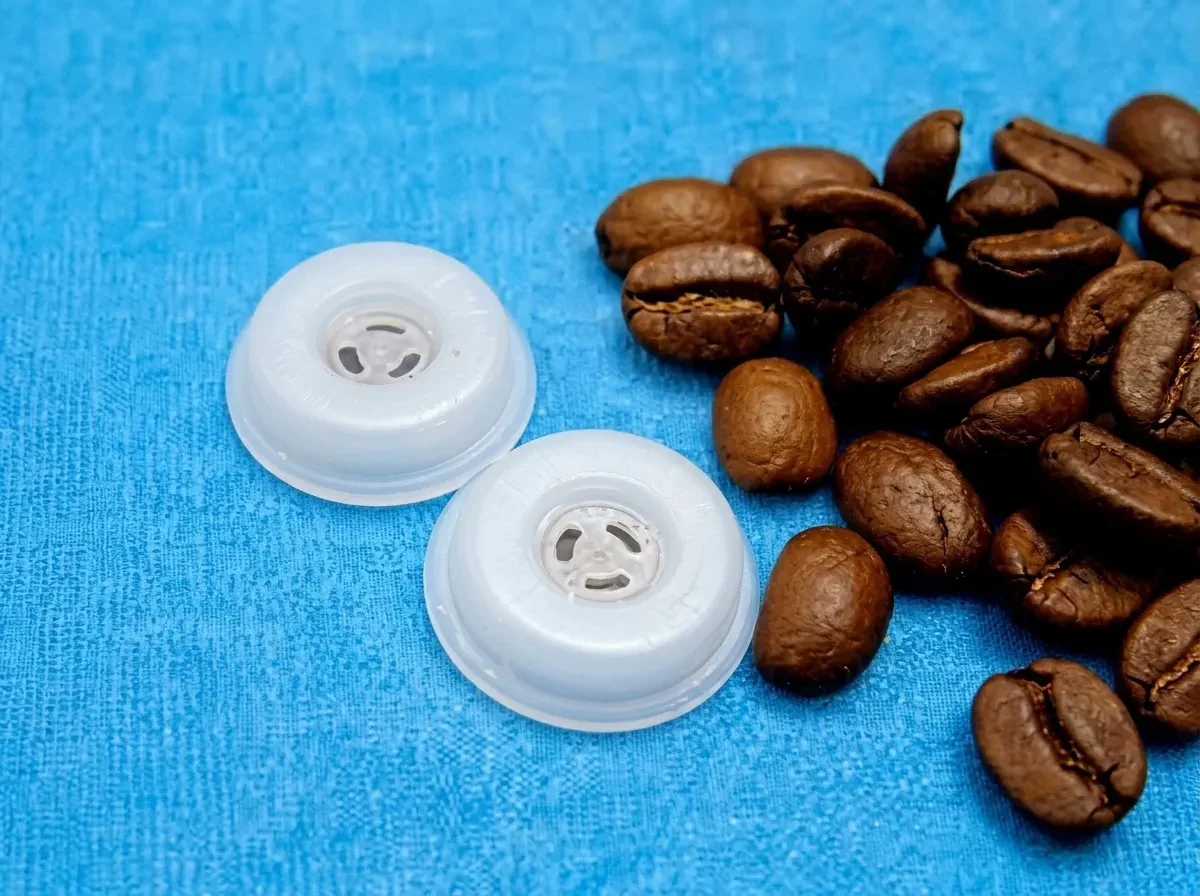
Einweg-Entgasungsventile
Eines der wichtigsten Merkmale bei Verpackungen für gerösteten Kaffee ist das Einweg-Entgasungsventil.
Frisch gerösteter Kaffee setzt nach dem Rösten noch tagelang oder sogar wochenlang auf natürliche Weise Kohlendioxid frei. Wenn dieses Gas in einer verschlossenen Verpackung eingeschlossen wird, baut sich Druck auf, wodurch sich der Beutel aufblähen, verformen oder sogar platzen kann.
Ein Entgasungsventil löst dieses Problem, indem es Kohlendioxid entweichen lässt und gleichzeitig verhindert, dass Sauerstoff in die Verpackung eindringt.
Zu den Vorteilen gehören:
- Erhält die Frische des Kaffees
- Bewahrt Aroma und Geschmack
- Verhindert das Aufquellen der Verpackung
- Verlängert die Haltbarkeit
- Verbessert die Verkehrssicherheit
Die meisten hochwertigen Kaffeeprodukte in Bohnenform sind mit Entgasungsventilen ausgestattet, während Instantkaffee diese Funktion in der Regel nicht benötigt.
Ein erfahrener Hersteller von Kaffeebeuteln kann Ihnen den passenden Ventiltyp empfehlen, der auf Ihre Kaffeesorte, das Füllgewicht und die voraussichtliche Haltbarkeit abgestimmt ist.
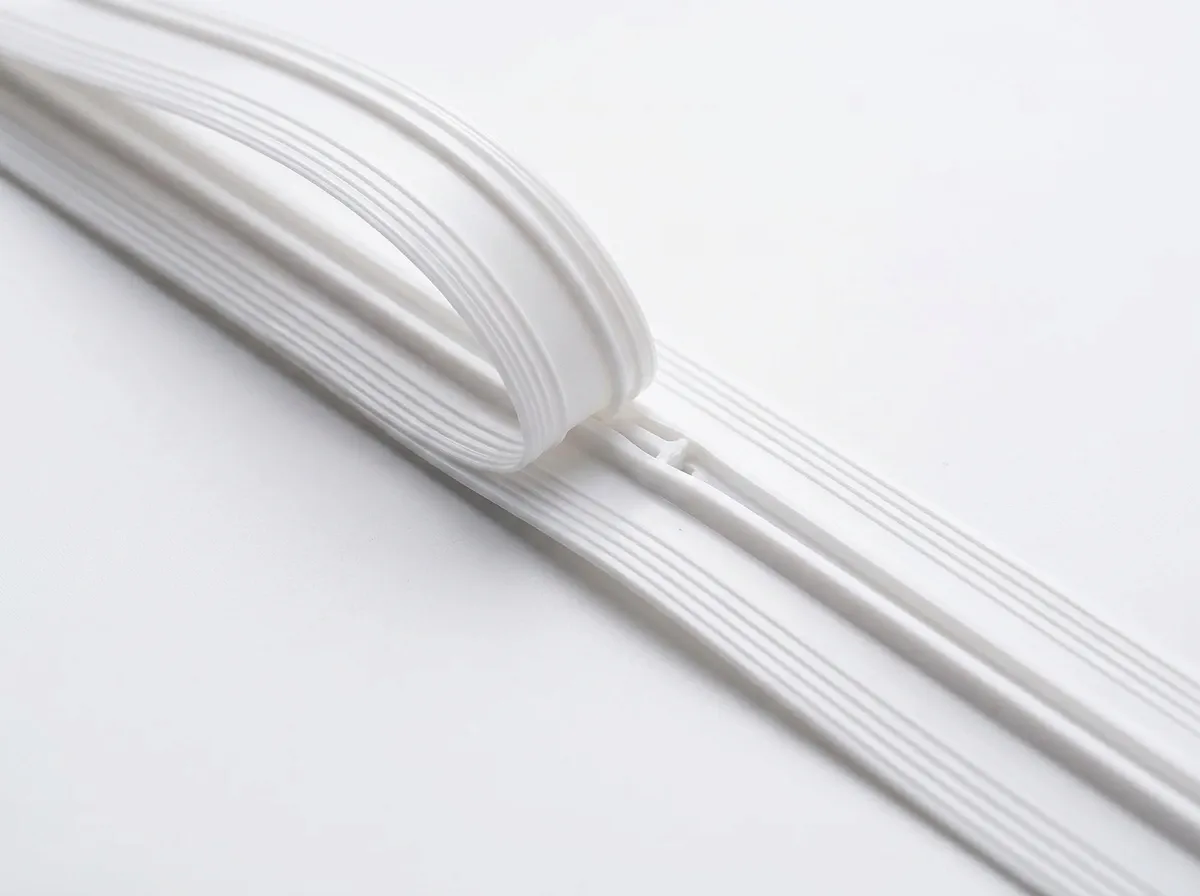
Wiederverschließbare Reißverschlüsse
Dank eines wiederverschließbaren Reißverschlusses können Verbraucher die Verpackung nach jedem Gebrauch wieder verschließen, wodurch der Kontakt mit Luft und Feuchtigkeit verringert wird.
Zu den Vorteilen gehören:
- Verbesserte Benutzerfreundlichkeit
- Längere Frische nach dem Öffnen
- Geringerer Bedarf an zusätzlichen Lagerbehältern
- Höherer wahrgenommener Produktwert
Reißverschlussbeutel eignen sich besonders gut für Kaffeeverpackungen im Einzelhandel mit einem Gewicht von 250 g bis 1 kg.
Bei der Gestaltung von Kaffeeverpackungen mit Reißverschluss müssen Hersteller darauf achten, dass oberhalb des Reißverschlusses ausreichend Platz für die Versiegelung vorhanden ist, um die Produktionseffizienz und die Versiegelungsqualität zu gewährleisten.
Abreißkerben
Verbraucher erwarten, dass sich Kaffeeverpackungen leicht öffnen lassen, ohne dass eine Schere benötigt wird.
Aufreißkerben sorgen für ein sauberes Öffnen und minimieren gleichzeitig das Risiko, die Verpackung zu beschädigen.
Die richtige Platzierung der Kerbe ist wichtig. Sie sollte:
- Leicht zu finden sein
- Immer offen halten
- Vermeiden Sie es, die Heißsiegelungen zu beeinträchtigen
- Die Festigkeit der Verpackung während des Transports gewährleisten
Obwohl diese Funktion kostengünstig ist, trägt sie doch erheblich zur Verbesserung des gesamten Kundenerlebnisses bei.

Blechverbindungen und Möglichkeiten zum Wiederverschluss
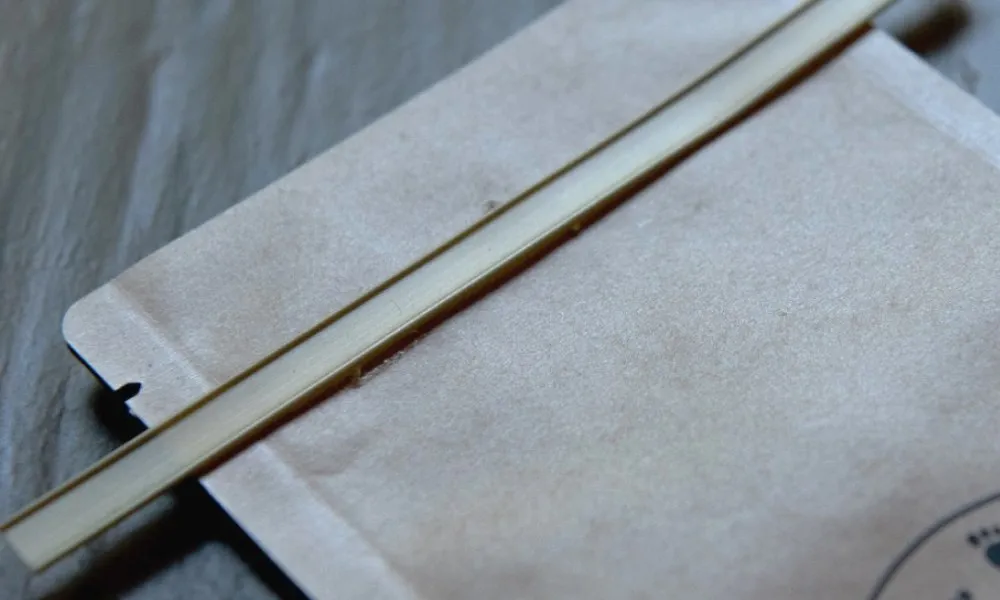
Zinnverschlüsse sind nach wie vor eine beliebte Verschlussvariante für bestimmte Kaffeeverpackungsformate, insbesondere für Seitenfaltenbeutel.
Im Gegensatz zu wiederverschließbaren Reißverschlüssen ermöglicht ein Tin Tie den Verbrauchern, die Beutelöffnung nach dem Öffnen zusammenzufalten und zu verschließen.
Zu den Vorteilen gehören:
- Günstiger als Reißverschlusssysteme
- Aussehen traditioneller Kaffeeverpackungen
- Geeignet für Kaffeebeutel aus Papier
- Einfach in die Produktion zu integrieren
Einige Kaffeemarken kombinieren Verschlussklammern mit Innenauskleidungen, um ein Gleichgewicht zwischen Kosten und Funktionalität herzustellen.
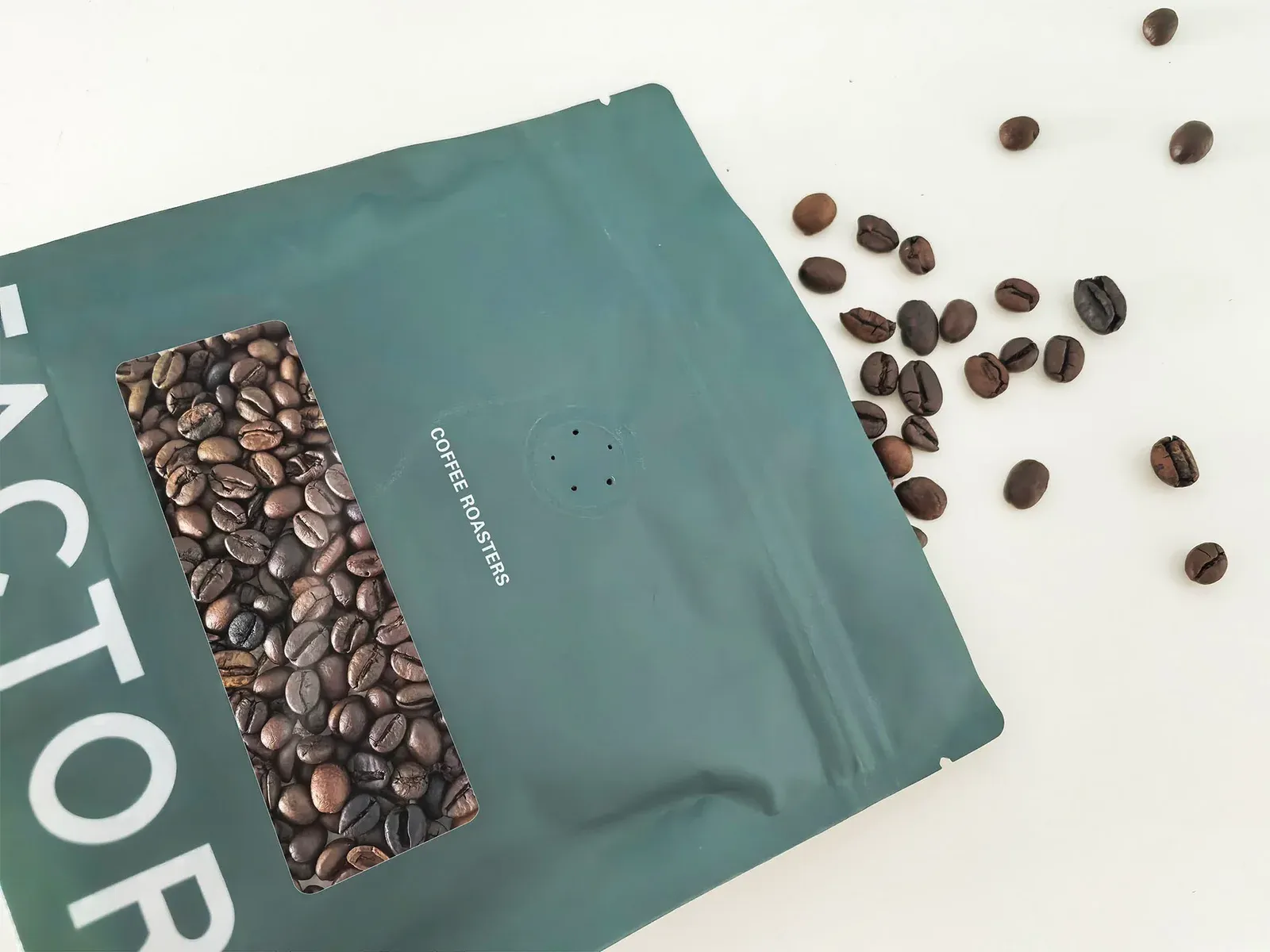
Transparente Fenster
Durch die transparenten Fenster können Verbraucher den Kaffee im Inneren der Verpackung sehen, was die Sichtbarkeit des Produkts erhöht und das Vertrauen der Verbraucher stärkt.
Allerdings empfehlen die Hersteller nicht immer bestimmte Fensterausführungen.
Zu den möglichen Nachteilen zählen:
- Lichtbarriere mit reduzierter Lichtdurchlässigkeit
- Geringere Sauerstoffbarriere bei einigen Strukturen
- Erhöhte UV-Strahlung
- Mögliche Auswirkungen auf die langfristige Frische
Bei hochwertigem Röstkaffee, der eine längere Haltbarkeit erfordert, bietet eine Vollbarriere-Verpackung ohne Sichtfenster oft einen besseren Schutz.
Die Größe und Platzierung der Fenster sollten daher sowohl unter Berücksichtigung der Marketingziele als auch der Verpackungsleistung bewertet werden.
Wählen Sie die richtigen Druck- und Veredelungsoptionen
Die Drucktechnik beeinflusst nicht nur das Erscheinungsbild der Verpackung, sondern auch die Produktionskosten, die Vorlaufzeit und die Mindestbestellmenge.
Die Wahl des geeigneten Druckverfahrens hängt von Ihrem Produktionsvolumen und Ihren Geschäftszielen ab.
Digitaldruck
Der Digitaldruck erfreut sich zunehmender Beliebtheit bei neuen Kaffeemarken und Unternehmen, die saisonale oder limitierte Produkte auf den Markt bringen.
Zu den Vorteilen gehören:
- Geringe Mindestbestellmengen
- Schnelle Produktion
- Keine Kosten für Druckzylinder
- Einfache Aktualisierung der Grafiken
- Ideal für Markttests
Der Digitaldruck eignet sich besonders für kleine Auflagen, bei denen die Gestaltungsflexibilität wichtiger ist als die Stückkosten.
Tiefdruck
Der Tiefdruck ist nach wie vor die bevorzugte Lösung für die groß angelegte kommerzielle Produktion.
Zu den Vorteilen gehören:
- Hervorragende Farbkonsistenz
- Hervorragende Bildqualität
- Hohe Produktionsgeschwindigkeit
- Niedrigere Stückkosten bei großen Stückzahlen
- Große Produktionsmengen
Zwar sind beim Tiefdruckverfahren anfängliche Investitionen in Druckzylinder erforderlich, doch für etablierte Kaffeemarken mit wiederkehrenden Aufträgen erweist sich dieses Verfahren als äußerst kosteneffizient.
Viele große Einzelhändler und internationale Kaffeeunternehmen setzen aufgrund der Stabilität und der Druckqualität weiterhin auf den Tiefdruck.
Oberflächenbeschaffenheiten
Die Oberflächenveredelung verbessert sowohl die optische Anziehungskraft als auch das haptische Erlebnis von Kaffeeverpackungen.
Mattes Finish
Matte Oberflächen sorgen für ein edles, modernes Erscheinungsbild.
Zu den Vorteilen gehören:
- Hochwertige Optik
- Geringere Blendung
- Sanfter visueller Effekt
Matte Verpackungen werden von Spezialitätenkaffeemarken häufig verwendet.
Hochglanz-Oberfläche
Glänzende Oberflächen sorgen für leuchtendere Farben und einen stärkeren visuellen Kontrast.
Zu den Vorteilen gehören:
- Auffälliges Erscheinungsbild
- Lebendige Grafiken
- Verbesserte Farbsättigung
Für Produkte, die für Supermärkte und Einzelhandelsketten bestimmt sind, werden häufig Hochglanzoberflächen gewählt.
Schlussfolgerung
Eine effektive Kaffeeverpackung ist das Ergebnis durchdachter Technik und ansprechenden Designs. Jede Entscheidung – von der Wahl der Beutelstruktur und der Barrierewerkstoffe bis hin zur Auswahl funktionaler Merkmale und Druckverfahren – wirkt sich auf die Frische des Produkts, die Produktionseffizienz und die Wahrnehmung der Marke aus.
Zwar ist das visuelle Branding wichtig, doch bei einem erfolgreichen Verpackungsdesign für Kaffee werden auch die Kompatibilität mit den Produktionsprozessen, die Anforderungen an die Haltbarkeit und die Leistungsfähigkeit der Lieferkette berücksichtigt. Werden diese Faktoren bereits in einer frühen Phase des Entwicklungsprozesses berücksichtigt, lassen sich Kosten senken und ein reibungsloser Übergang zur Serienproduktion gewährleisten.
Durch die Zusammenarbeit mit einem erfahrenen Anbieter von Kaffeeverpackungen, erhalten Marken Zugang zu Fachwissen in den Bereichen Materialauswahl, Konstruktionsplanung, OEM/ODM-Maßanfertigung von Kaffeebeuteln, Qualitätskontrolle und Großserienfertigung. Das Ergebnis sind Verpackungen, die nicht nur im Regal auffallen, sondern den Kaffee auch von der Herstellung bis in die Tasse des Verbrauchers schützen.
