



Why do the bags we use in our daily lives have such strong anti-drop, puncture resistance, and preservation functions?
Thanks to the lamination process of a flexible packaging bag, you will find that almost all bags are composed of multiple layers of structure, and each layer of structure has its own meaning of existence. For example, BOPP has good barrier properties, VMPET has good light shielding properties, PE has good puncture resistance, and so on.
And here comes a question that how can the connected be so close that it can protect things inside?
Let us partner with Zhongjia Printing, an expert flexible packaging manufacturer, to find out the answer!
What is Lamination?
Lamination is one of the most important parts in flexible packaging printing, which can seriously affect the functionality and aesthetics of the packaging. If there are problems with the lamination process, it will lead to huge losses. Often, the problems that arise from compounding are difficult to detect before the product is used. So it is necessary to conduct testing before leaving the factory, and the testing must meet the performance requirements of the product before leaving the factory.
How it Works
Simply put, it is to use liquid glue to bond two layers of film together. After curing and drying, the glue will become solid. At this point, the strength of the two layers of film is very high, and it is very difficult to peel them off
4 Common Lamination Processes
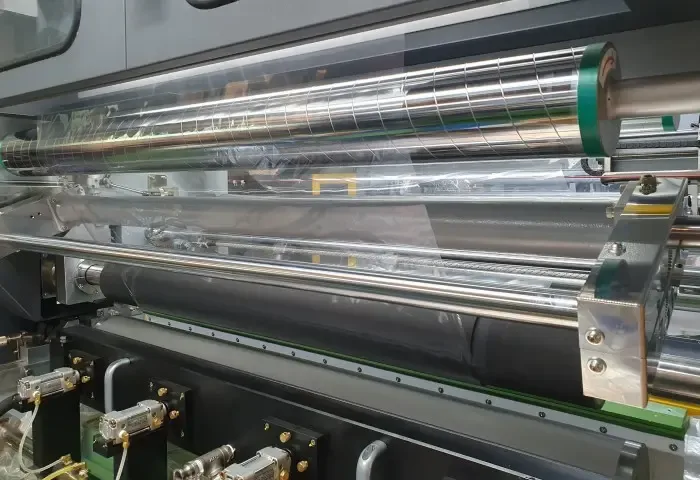
Dry Lamination Process
It uses an adhesive composed of a main agent and a curing agent, diluted with ethyl acetate as the solvent. The main agent and curing agent are separately diluted with ethyl acetate, then combined and stirred. A high-mesh anilox roller uniformly applies the adhesive onto the film, and an oven initially evaporates the ethyl acetate. After curing, the adhesive fully solidifies, completing the lamination process.
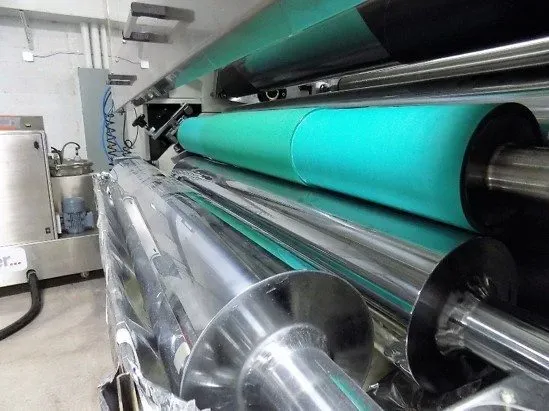
Solventless Lamination Process
Solventless lamination employs an adhesive (main agent + curing agent) that is automatically mixed and dispensed via a machine. A rubber roller evenly spreads the adhesive on the film. Unlike dry lamination, it requires no oven evaporation. Post-curing, the adhesive solidifies completely, finishing the lamination.
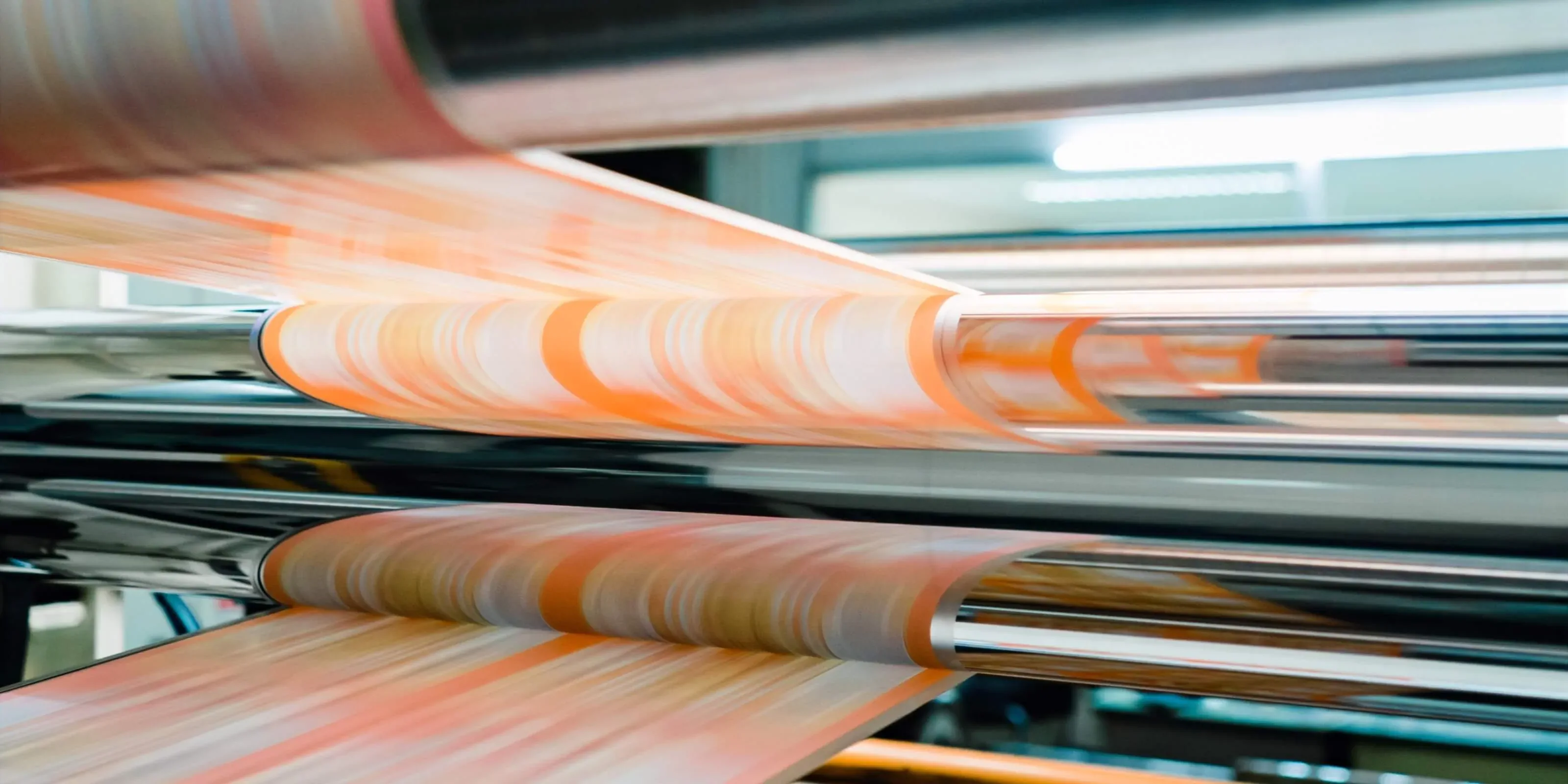
Water-Based Adhesive Lamination Process
This process uses an adhesive (main agent + curing agent) diluted with distilled water as the solvent. The agents are separately diluted with water, combined, and stirred. A high-mesh anilox roller applies the adhesive, and an oven initially evaporates moisture. After curing, the adhesive solidifies, completing lamination.
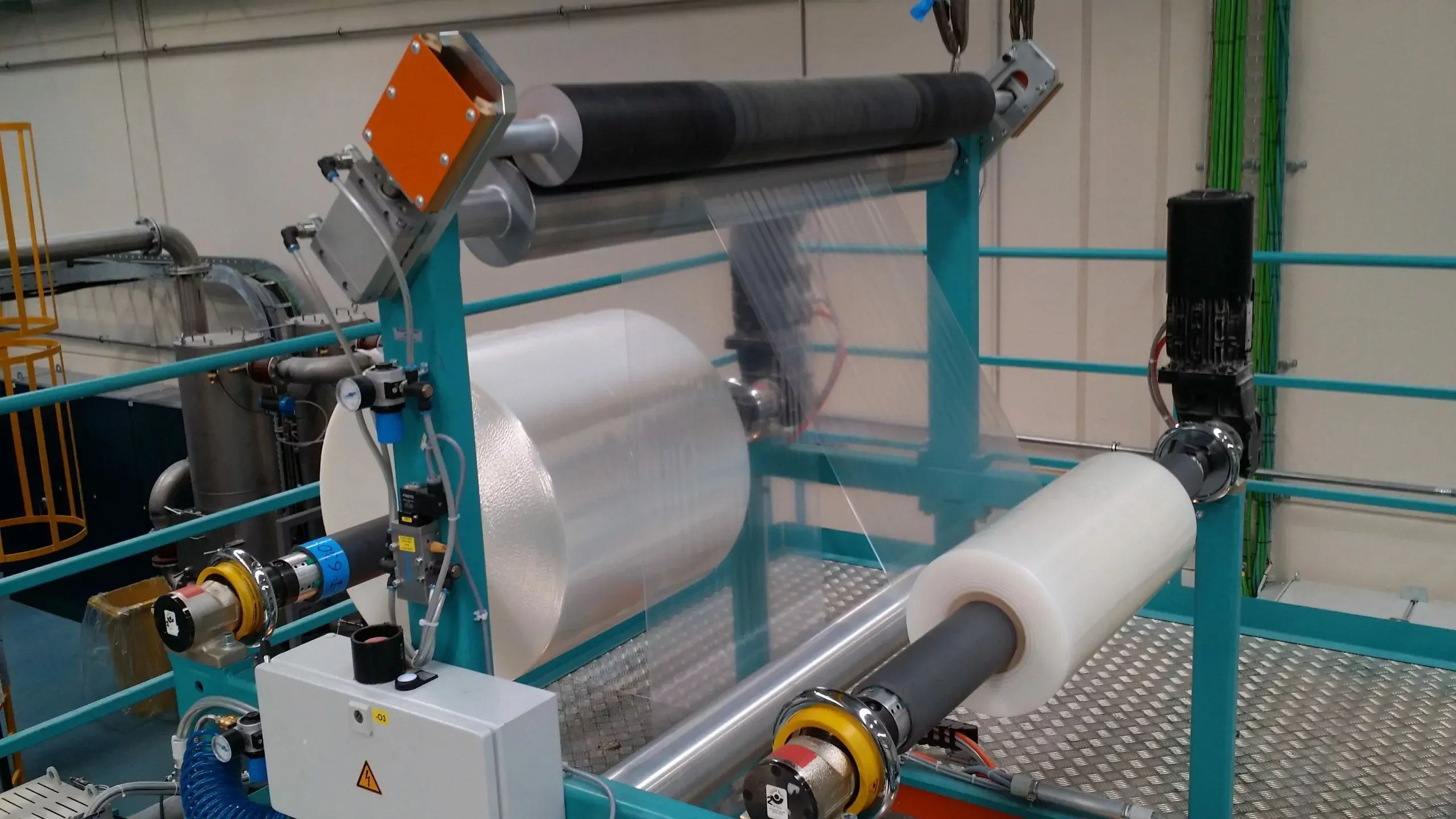
Extrusion Coating Lamination Process
Unlike the above three, extrusion coating uses PE granules. These are melted into liquid PE via machinery, then uniformly coated onto the film with an extrusion roll. Finally, cooling solidifies the PE, concluding the process.
Conclusion
The above are the four traditional composite processes, among which dry composite has the longest history and the most mature process; The solvent-free composite has the lowest price, but some films are not suitable for use; The cost of water gel composite is relatively high, but there is no solvent residue; Coating composite is used less because the speed is too slow, which may affect the functionality of the film.
The choice of process to use depends on the requirements of the finished product, as each has its own advantages and disadvantages.
So that’s all for this sharing. If you have any questions or need to discuss, you can add them on WeChat or contact us by email. See you next time!
About Zhongjia Printing
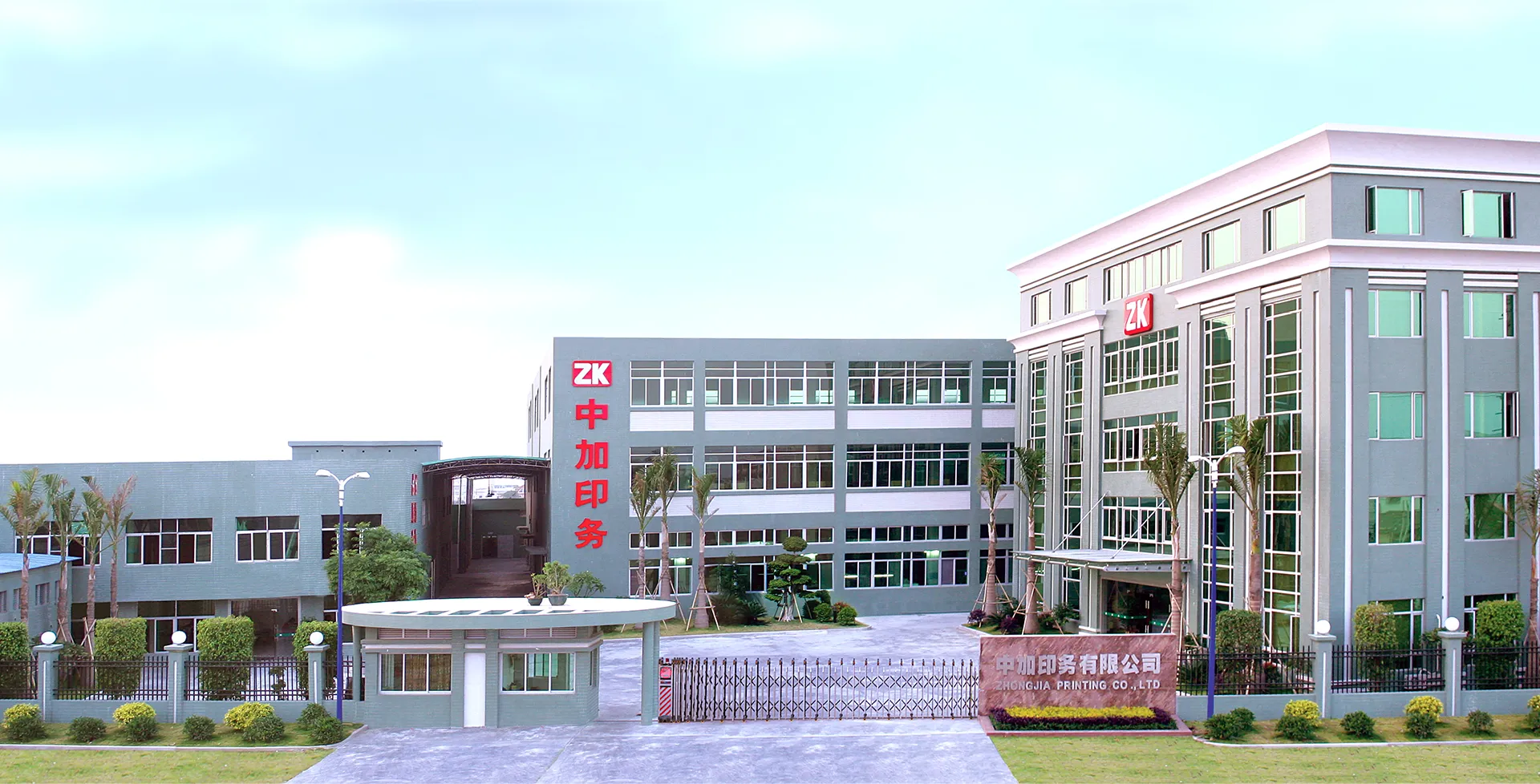
Zhongjia Packaging is an expert flexible packaging manufacturer, providing brands and distributors with a reliable custom wholesale flexible packaging supply. Our facility operates under internationally aligned SOP systems, backed by years of production experience and consistent positive feedback from global clients.
One of our core strengths is our water-based ink printing technology, which enables sharp, odor-controlled, and eco-friendly visuals while maintaining strong adhesion on flexible substrates. For projects that require differentiation, our custom flexible packaging solution allows you to tailor materials, barrier properties, formats, and artwork to your exact specifications.
