



Lorsqu'un concepteur remet le travail final à l'imprimeur, un choix minime mais décisif est souvent négligé : dont l'encre? L'encre que vous choisissez a une incidence sur la production, la conformité, les performances du produit et même l'image de marque que les clients sentent lorsqu'ils ouvrent l'emballage. D'une manière générale, vous aurez le choix entre deux familles : les encres à base d'eau, qui sont douces et peu polluantes, et les encres à base de solvant, qui sont rapides et robustes. Voici un guide pratique pour vous aider à choisir le bon gobelet.
En tant que expert fabricant d'emballages flexibles, Imprimerie Zhongjia est prêt à partager avec vous un guide qui vous aidera à choisir celui qui convient le mieux à votre projet.
Les arguments environnementaux en faveur des encres à base d'eau
Le plus grand avantage de encres à base d'eau est la performance environnementale. Les formulations modernes à base d'eau utilisent de l'eau et des co-solvants inoffensifs plutôt que de grands volumes de composés organiques volatils (COV). Cela se traduit par une réduction considérable des émissions au niveau de la presse, un besoin beaucoup moins important de traitement des fumées à grande échelle (RTO) et un environnement de travail plus sûr pour les opérateurs de presse - pas de respirateurs épais, pas d'odeur constante de solvant.
D'un point de vue réglementaire, c'est important : les systèmes à base d'eau passent généralement plus facilement que les systèmes à base de solvant les listes plus strictes de substances réglementées (par exemple, les substances extrêmement préoccupantes dans le cadre de REACH). Si vos emballages sont destinés à l'alimentation, aux produits pour bébés ou à l'exportation vers l'Europe et l'Amérique du Nord, la conformité réglementaire et douanière en matière de chimie des encres est de moins en moins négociable.
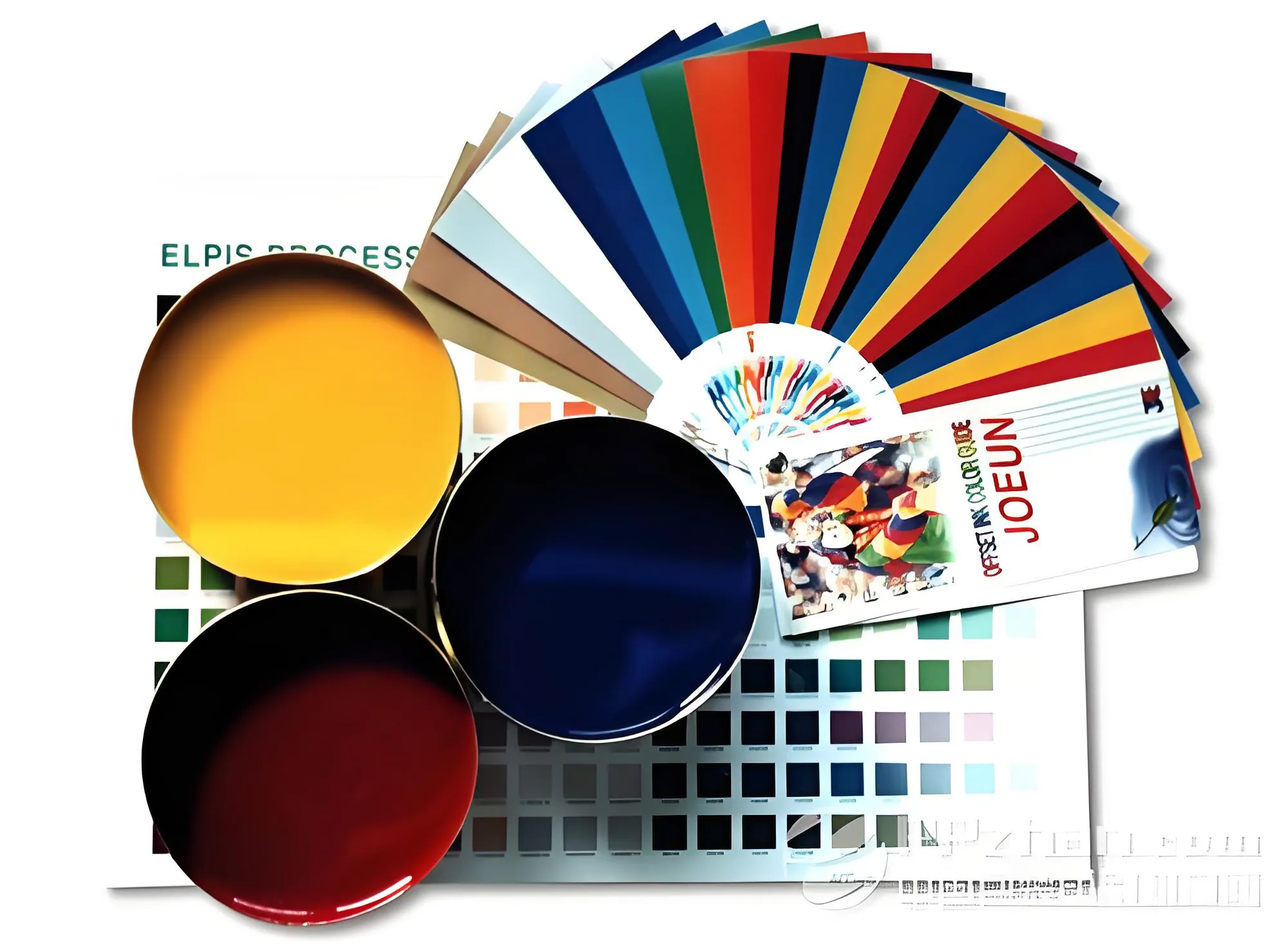
Performance et productivité : le compromis classique
Historiquement, les encres à base de solvant ont été les plus performantes en termes de vitesse et d'adhérence :
- Les encres à solvant sèchent rapidement et adhèrent de manière agressive aux substrats non absorbants (PET, films métallisés, feuilles), ce qui les rend idéales pour les lignes d'héliogravure et de flexographie à grande vitesse de 200 m/min ou plus.
- Ils résistent également mieux que la plupart des anciens systèmes à base d'eau aux conditions extrêmes - chaînes de froid de type congélation-décongélation et procédés prolongés à la vapeur ou à l'autoclave à haute température.
Cependant, la technologie des encres à base d'eau a progressé. De nouvelles dispersions de polyuréthane et des systèmes de séchage améliorés permettent à l'industrie de l'imprimerie de s'adapter à l'évolution du marché. encres à base d'eau pour approcher les vitesses d'impression autrefois réservées aux encres à solvant. Les installations modernes peuvent atteindre des vitesses de production comparables à celles des lignes à solvants, et la résistance au pelage des films PET s'est améliorée - les valeurs typiques de pelage des encres à base d'eau modernes peuvent atteindre ~5,2 N/15mm contre ~6,0 N/15mm pour les systèmes à solvants, ce qui représente un écart pratique pour la plupart des produits finis.
En bref, pour la majorité des emballages de produits alimentaires de consommation - chips, snacks, produits congelés et réfrigérés -, les emballages de produits alimentaires de consommation ne sont plus nécessaires.encres à base d'eau offrent désormais une qualité d'impression et une adhérence compétitives. Pour les scénarios industriels extrêmes (stockage congelé pendant plusieurs années à -40°C ou stérilisation prolongée à haute température), les encres à base de solvant peuvent encore être préférées.
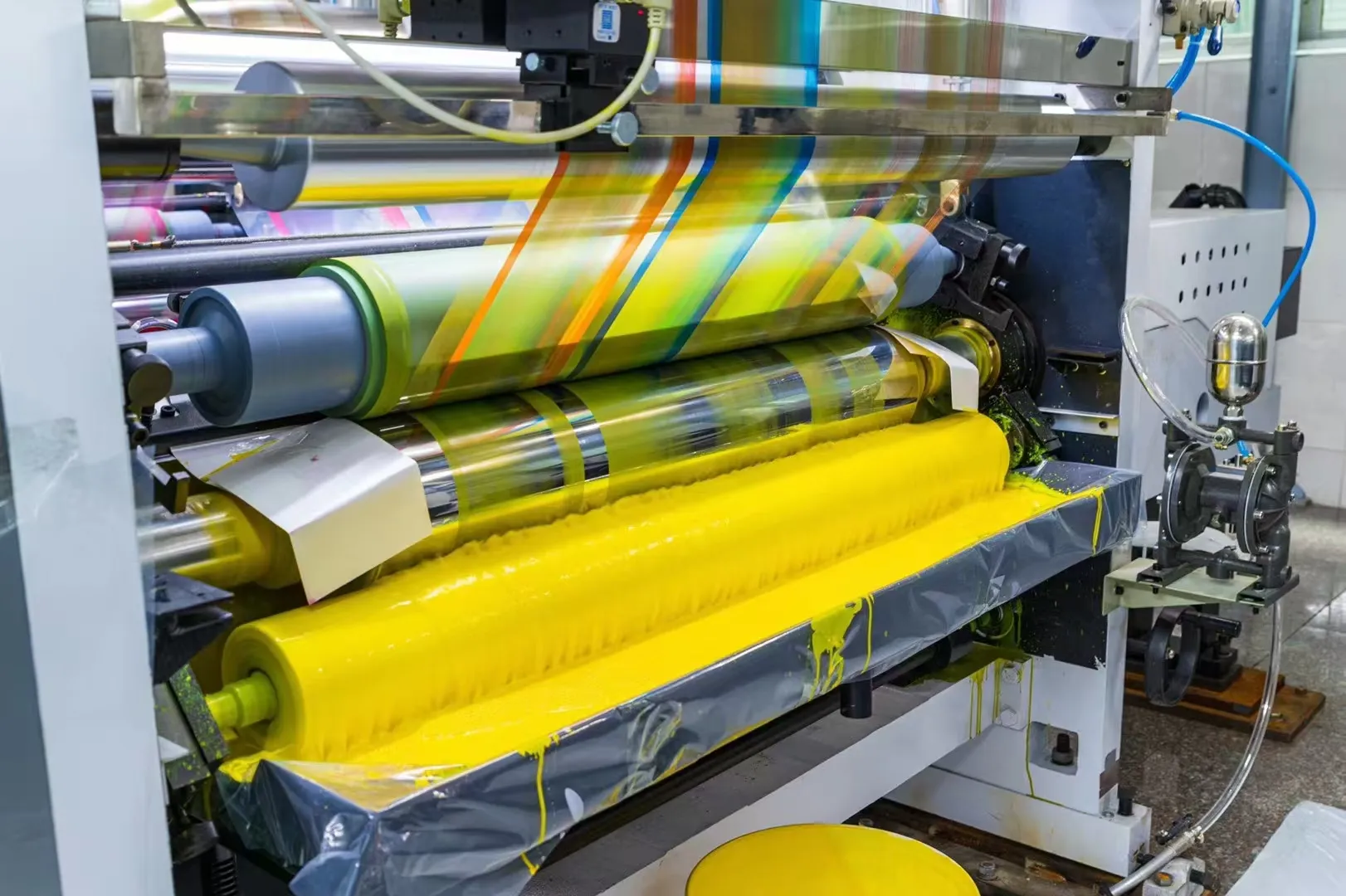
Coût : Ne vous fiez pas uniquement au prix unitaire
À première vue, les encres à solvant coûtent généralement moins cher au kilo. Mais une analyse complète des coûts change la donne :
- L'impression à l'aide de solvants nécessite souvent des équipements coûteux de contrôle des gaz d'échappement et des COV, une consommation d'énergie élevée (carburant RTO), des coûts permanents de mise en conformité avec les normes environnementales et des arrêts éventuels pour des inspections réglementaires.
- Les systèmes à base d'eau peuvent avoir un prix unitaire d'encre plus élevé, mais ils éliminent ou réduisent ces coûts en aval. De nombreux transformateurs font état d'une amélioration du coût total après le passage au système à base d'eau : réduction des dépenses d'investissement pour le contrôle des émissions, réduction des factures d'énergie et diminution des interruptions liées à la réglementation.
Par exemple, après avoir converti une partie de notre production à des procédés d'encre à base d'eau, nous avons observé une réduction de 2-5% des coûts globaux d'impression et une baisse significative des émissions de COV - de l'ordre de centaines de tonnes par an - grâce à une réduction de la consommation de solvants et à des besoins plus simples en matière de réduction des émissions.
Expérience de la marque et du consommateur : un retour sur investissement négligé
Au-delà de la conformité et des coûts, la chimie des encres contribue à la perception de la marque et à la sécurité :
- Personne ne veut d'une odeur résiduelle de solvant dans un sac alimentaire. A encre à base d'eau permet de s'assurer que l'arôme qui accueille les clients est bien celui du produit, et non celui des solvants.
- Pour les aliments pour bébés, les snacks pour enfants et les marques soucieuses de la santé, la valeur de communication des encres à faible teneur en COV et à faible migration est élevée. Les consommateurs récompensent de plus en plus les marques qui racontent des histoires crédibles sur l'environnement et la sécurité.
Si le positionnement de votre marque met l'accent sur la santé, le développement durable ou la prise en compte des besoins des familles, la sélection de encres à base d'eau peut être un élément authentique de ce récit.

Guide pratique de sélection
Posez les questions suivantes avant de choisir :
- Où le paquet sera-t-il vendu et stocké ? Les marchés d'exportation soumis à des règles strictes en matière de produits chimiques favorisent les produits chimiques à base d'eau.
- Sur quel substrat imprimez-vous ? Les films métallisés hautement non absorbants préfèrent toujours les systèmes à base de solvants, à moins que vous ne validiez une adhésion moderne à base d'eau.
- Quelles sont les demandes thermiques des utilisateurs finaux ? L'autoclave, la cuisson à la vapeur prolongée ou le stockage extrêmement long au frais ou au congélateur peuvent encore nécessiter des encres à base de solvant.
- Quelle est votre tolérance en matière d'investissements environnementaux et de coûts de mise en conformité ? Si vous voulez éviter les RTO et les coûts élevés des COV, les produits à base d'eau sont convaincants.
- La perception de la marque fait-elle partie du retour sur investissement ? Les marques soucieuses du développement durable tirent une valeur ajoutée des allégations relatives à l'eau.
Dernière réflexion
En une phrase : choisissez en fonction du positionnement du produit et d'un cas d'utilisation réel plutôt qu'en fonction des absolus du laboratoire. Si la durabilité, la conformité aux règles d'exportation et la sécurité des consommateurs sont essentielles, encres à base d'eau sont la solution par défaut pour la plupart des projets d'emballages souples alimentaires aujourd'hui. Si votre produit nécessite des performances extrêmes aux limites du traitement ou du stockage, les encres à solvant restent une option pratique et éprouvée.
Vous voulez voir la différence en personne ? Nous vous invitons à visiter notre ligne de production - voir l'impression, le séchage et les tests de résistance au pelage côte à côte est le moyen le plus rapide de prendre une décision éclairée pour votre projet d'emballage.
À propos de Zhongjia Printing
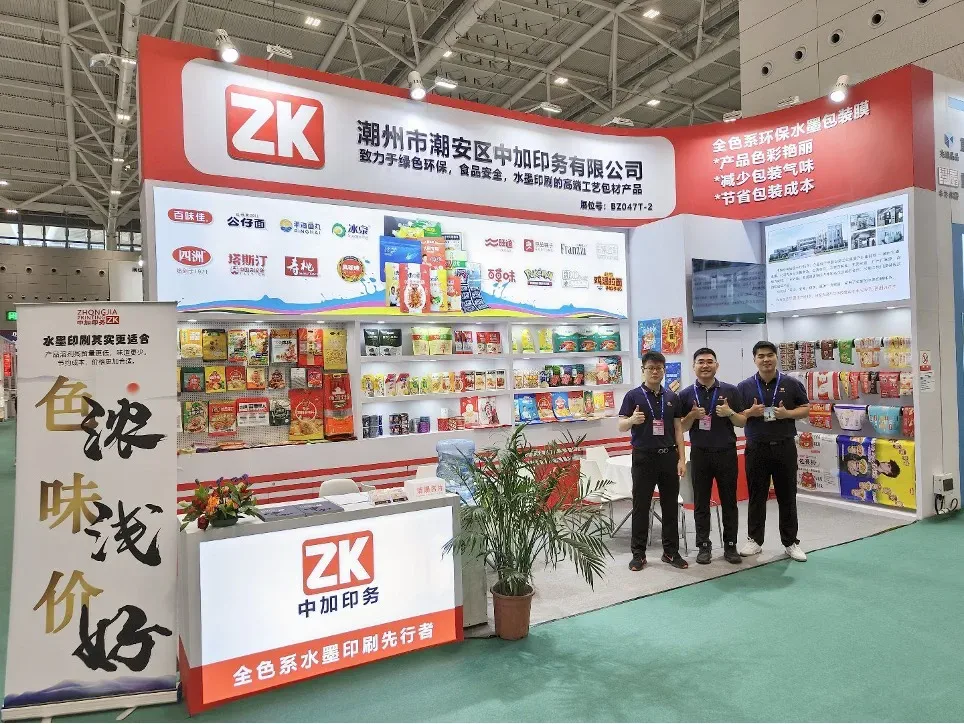
Imprimerie Zhongjia est un fabricant expert d'emballages flexibles fournir emballages flexibles personnalisés en gros pour les marques qui privilégient la sécurité, la clarté et la durabilité. Nos installations sont soumises à des exigences de sécurité internationalement reconnues, y compris les normes appliquées aux produits destinés aux enfants et aux femmes enceintes, ce qui garantit que chaque pochette et chaque structure de film sont produites avec un contrôle de qualité rigoureux.
L'un des principaux atouts de notre système de production est l'adoption d'un système de gestion des déchets. encre à base d'eau et pleinement impression à base d'eau des flux de travail. Cette approche permet de réduire les émissions de solvants, d'améliorer la sécurité au contact des aliments et de produire des graphiques propres et éclatants sans compromettre la responsabilité environnementale.
