



The best kemasan permen khusus depends on each candy’s moisture sensitivity, fat content, shelf-life target, distribution conditions, and packaging equipment. To choose the right kemasan permen khusus, match the packaging material, barrier properties, bag format, and sealing performance to the specific candy type and its storage conditions. Zhongjia Kemasan provides flexible packaging solutions with pencetakan dengan tinta berbasis air, serving brands and distributors in more than 20 countries with custom bags and rollstock options.
Why Does Candy Type Matter When Choosing Packaging?

Different candies have different packaging requirements because moisture, oxygen, fat, temperature, and physical handling affect product quality in different ways. A packaging structure that works for hard candy may not provide sufficient protection for gummies or chocolate.
According to the National Confectioners Association’s 2025 industry report, U.S. confectionery sales exceeded $54 billion in 2024, and four major seasonal periods accounted for 62% of sales. These figures highlight the commercial importance of packaging that supports both everyday retail and seasonal promotions.
For B2B buyers, the first step is to identify the product’s main risk:
- Moisture-sensitive candy: Requires a suitable moisture barrier to help prevent stickiness, texture changes, or sugar crystallization.
- Fat-containing candy: Needs protection appropriate to its oxidation sensitivity and storage conditions.
- Fragile candy: Requires packaging that limits crushing, abrasion, and transit damage.
- Seasonal or gift candy: Needs a design that supports branding, shelf visibility, and the intended pack size.
What Packaging Works Best for Different Types of Candy?
The best packaging format depends on the candy’s physical characteristics, target shelf life, filling process, and retail channel. Buyers should evaluate the following options before requesting samples or production quotations.
| Candy type | Main packaging priorities | Suitable formats to evaluate |
|---|---|---|
| Gummies and chewy candy | Moisture control, reliable seals, anti-stick performance | Stand-up pouches, zipper bags |
| Chocolate and chocolate-coated candy | Fat and oxygen protection, light protection where needed, temperature control | High-barrier pouches, pillow bags |
| Hard candy and lollipops | Moisture resistance, abrasion protection, secure sealing | Pillow bags, flat pouches, rollstock packs |
| Cotton candy | Moisture protection, low compression, package integrity | Larger flexible pouches, customized bags |
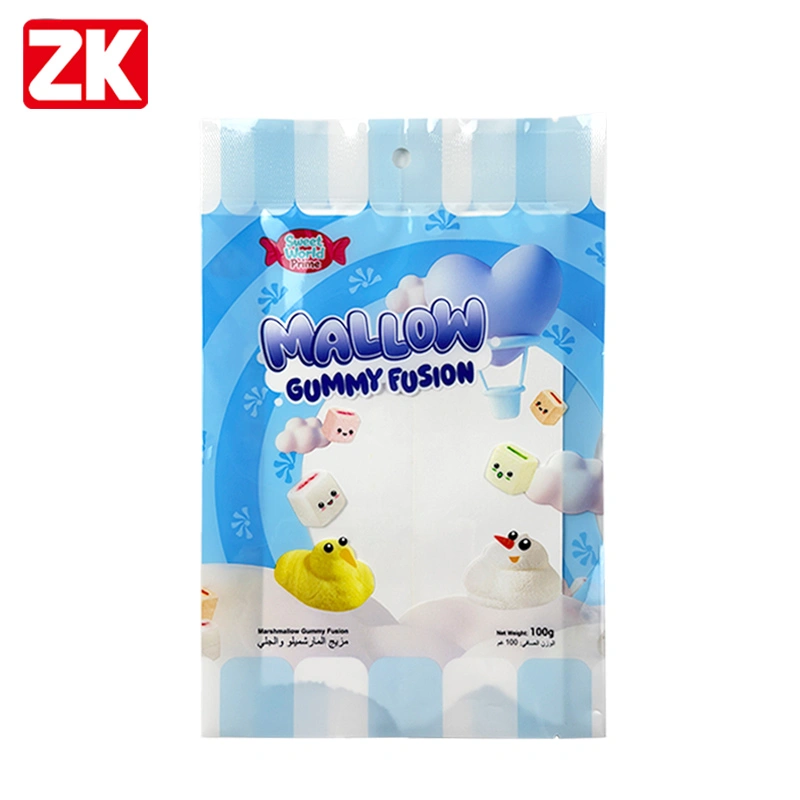
| Mixed candy and gift packs | Product visibility, portioning, branding | Stand-up pouches, zipper bags, custom-printed bags |
How Should You Package Gummies and Chewy Candy?
Gummies and chewy candy need packaging that controls moisture exchange and maintains dependable seals. Excessive moisture gain can make pieces sticky, while moisture loss can change their texture.
Select a flexible packaging structure with a verified moisture-barrier level suited to the product. Stand-up pouches provide shelf visibility and can accommodate resealable zippers for multi-serving packs. For single-serving products, simpler sealed bags may offer a more efficient format.
What Is the Best Packaging for Chocolate Candy?
Chocolate packaging must account for fat oxidation, aroma protection, light exposure, and temperature during storage and transport. A high-barrier structure may be appropriate when the product requires stronger protection, but the final choice depends on the chocolate formulation and shelf-life target.
Use a structure that has been tested for the intended application. Packaging alone cannot prevent chocolate from melting in excessive heat, so temperature-controlled storage and distribution remain essential.
How Should Hard Candy and Lollipops Be Packaged?
Hard candy and lollipops require moisture-resistant packaging with consistent seals to reduce exposure to humid air. Packaging must also withstand handling without excessive scuffing or tearing.
For high-volume production, rollstock film may suit automated form-fill-seal equipment. For smaller retail packs or assorted products, pre-made bags can offer greater flexibility in size and presentation.
What Packaging Protects Cotton Candy?
Cotton candy requires moisture protection and careful handling because its lightweight, delicate structure can collapse under compression. Choose a bag with sufficient internal space and a suitable barrier rather than relying on thickness alone.
The package should seal securely while leaving enough room to protect the product’s volume. Validate performance through filling and transport trials before committing to large production runs.


Which Materials and Bag Formats Should Buyers Choose?
Buyers should select packaging materials according to measurable barrier requirements and equipment compatibility, not appearance alone. Custom candy packaging can use different flexible structures, but each must be assessed for its intended product and storage conditions.
| Packaging option | Main advantage | What to verify |
|---|---|---|
| PET/PE laminate | Printability and heat-sealing potential | Required moisture barrier, seal strength, and intended use |
| PET/NY/PE laminate | Can provide improved toughness and puncture resistance | Actual barrier performance and laminate compatibility |
| Aluminum-foil laminate | Strong light, oxygen, and moisture barrier when properly constructed | Cost, seal integrity, and end-of-life requirements |
| Pre-made stand-up pouch | Upright shelf display and optional resealable zipper | Filling compatibility, gusset stability, and seal area |
| Film gulungan | Suitable for compatible automated packaging lines | Film specifications, forming performance, and sealing window |
These structures are starting points, not universal prescriptions. The packaging supplier should confirm the complete laminate specification, food-contact suitability, and performance requirements before production.
How Can Water-Based Ink Printing Improve Candy Packaging?
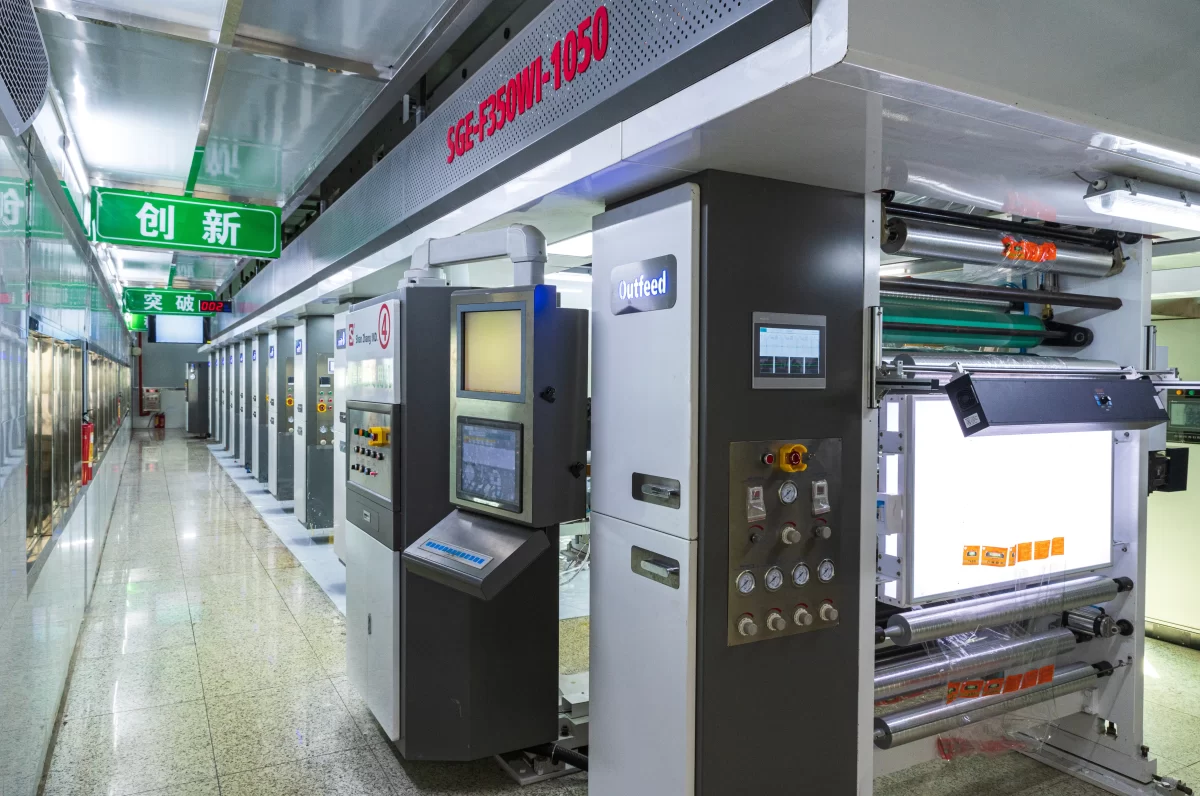
Pencetakan dengan tinta berbasis air uses water as a major carrier and can reduce reliance on organic solvents compared with conventional solvent-based printing systems. It gives candy brands another option when developing packaging with a more environmentally conscious printing process.
Yang U.S. Environmental Protection Agency’s graphic arts printing guidance identifies waterborne inks as one approach to reducing volatile organic compound (VOC) emissions from printing operations. Actual emissions depend on the ink formulation, printing process, and production conditions.
For brands sourcing custom candy packaging, pencetakan dengan tinta berbasis air can support:
- Brand differentiation: Custom graphics, colors, and product information help distinguish products on retail shelves.
- A more responsible printing approach: Water-based inks can reduce solvent-related emissions in suitable applications.
- Consistent production planning: Approved artwork, color standards, and print proofs help control quality across repeat orders.
However, water-based ink does not automatically make a finished pouch recyclable, compostable, or entirely environmentally friendly. The substrate, adhesive, laminate structure, and local recycling infrastructure also determine the package’s environmental performance.
What Should You Check Before Ordering Custom Candy Packaging?
A structured purchasing process reduces specification errors, production delays, and packaging failures. Before ordering kemasan permen khusus in bulk, complete these five steps.
- Define the product requirements. Provide the candy type, ingredients relevant to packaging performance, target shelf life, pack weight, and storage conditions.
- Choose the format and material. Decide between pre-made bags and rollstock, then specify barrier requirements, dimensions, closure options, and finish.
- Confirm food-contact compliance. Request documentation relevant to the destination market and the intended use of the packaging.
- Approve artwork and samples. Check print colors, text, barcode readability, dimensions, seal quality, and performance on the filling equipment.
- Validate production and delivery. Confirm minimum order quantity (MOQ), lead time, quality inspection criteria, shipping requirements, and repeat-order specifications.
Food-contact compliance deserves particular attention. The U.S. Food and Drug Administration’s guidance on food-contact materials explains that the regulatory status of a material depends on its individual substances and their intended conditions of use. Buyers should therefore verify the suitability of the complete packaging system for the target market instead of relying on a general claim that a material is food-safe.
How Can You Balance Packaging Cost, Quality, and Sustainability?
The most cost-effective packaging is the option that meets product protection requirements while fitting the filling process and distribution model. Choosing the lowest-priced film without testing it can increase waste, rejected packs, and product losses.
Compare suppliers using the same specifications: material structure, dimensions, printing coverage, order quantity, closure type, and delivery terms. Request samples and evaluate seal integrity, handling performance, and compatibility with production equipment.
For sustainability-focused projects, ask whether pencetakan dengan tinta berbasis air is suitable for the selected substrate and what evidence supports the supplier’s environmental claims. Evaluate the entire package rather than treating ink choice as proof of recyclability.
A useful additional step is to conduct a packaging failure review before finalizing the design. Record the likely failure modes for each candy type—such as moisture ingress, chocolate oxidation, seal leakage, or product crushing—and connect each risk to a measurable acceptance test. This product-specific checklist makes supplier comparisons more objective and helps prevent recurring issues after launch.
What Should You Ask a Custom Candy Packaging Manufacturer?
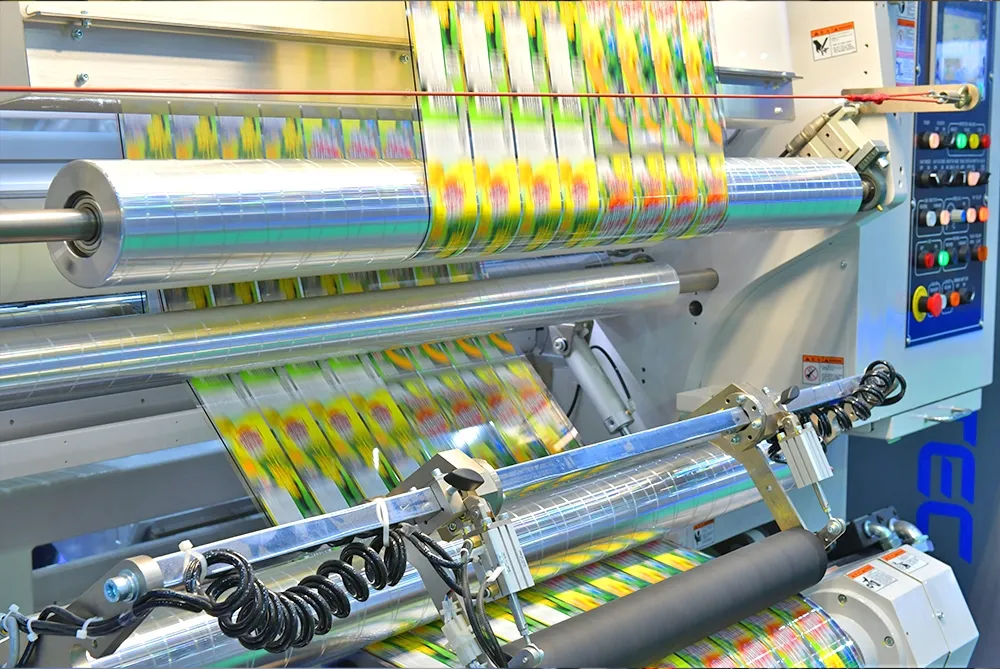
A qualified manufacturer should be able to explain material options, printing capabilities, quality checks, and production requirements in terms relevant to your product. Before placing an order, ask:
- Which packaging structures meet my candy’s barrier and shelf-life requirements?
- Can you supply pre-made pouches, zipper bags, or rollstock film for my production line?
- Is water-based ink printing suitable for my selected substrate and artwork?
- What food-contact documentation can you provide for my destination market?
- What are your MOQ, sampling process, production lead time, and quality inspection procedures?
Clear answers help importers, distributors, and private-label brands assess technical suitability as well as price.
Frequently Asked Questions
1. What is the best material for custom candy packaging?
The best material depends on moisture sensitivity, fat content, required shelf life, storage conditions, and sealing requirements. Compare tested laminate structures rather than choosing solely by material name.
2. Are stand-up pouches suitable for candy?
Yes. Stand-up pouches suit many gummies, chewy candies, and assorted confectionery products. A zipper can support resealing, while the material must still provide the protection required by the product.
3. Is rollstock film better than pre-made candy bags?
Rollstock film is appropriate for compatible automated packaging lines and high-volume production. Pre-made bags offer flexibility in pack design and filling methods. Equipment compatibility and total production cost should determine the choice.
4. Is water-based ink packaging environmentally friendly?
Water-based ink printing can reduce reliance on organic solvents and may reduce VOC emissions in suitable printing applications. The environmental impact of the complete package also depends on its substrate, laminates, adhesives, manufacturing process, and end-of-life options.
5. What information is needed for a custom candy packaging quotation?
Provide the candy type, target pack weight, bag dimensions, preferred material or barrier requirements, packaging format, artwork, order quantity, and destination market. These details help the manufacturer recommend a suitable solution and prepare a more accurate quotation.
Kesimpulan
Choosing custom candy packaging requires a balance of product protection, shelf presentation, printing quality, production efficiency, and regulatory compliance. Zhongjia Kemasan specializes in flexible packaging printed with tinta berbahan dasar air and serves more than 40 well-known companies across over 20 countries. With four high-speed production lines, laboratory testing, and a range of stand-up pouches, flat-bottom bags, spout pouches, and zipper bags, Zhongjia Kemasan supports customized packaging projects for food and other consumer products. Contact Zhongjia Kemasan to discuss your candy packaging requirements and request a quotation for your next project.
