



The distant sound of conflict in the Persian Gulf is no longer just international news. Through the interconnected global supply chain, it is beginning to impact factories thousands of miles away in China. For the l'industrie de l'emballage souple, the situation has become a real stress test involving raw material shortages, logistics disruption, and rapidly rising costs.
As uncertainty grows around the Strait of Hormuz, the cost and delivery stability of everyday products — including food pouches, pharmaceutical films, and e-commerce packaging — are increasingly under pressure. For companies operating in the l'industrie de l'emballage souple, maintaining supply chain stability has become a critical challenge.
The Three Pressures Facing the Flexible Packaging Industry
1. Raw Material Supply Tightening

China is one of the largest buyers of Iranian chemical products. More than 60% of China’s imported methanol comes from Iran, and methanol is a key upstream raw material used to produce polyethylene (PE) and polypropylene (PP) — two core resins widely used in the flexible packaging industry.
Iranian sources account for approximately 8.4% of China’s polyethylene imports et 5–7% of polypropylene imports. If geopolitical tensions lead to reduced production or port disruptions in Iran, the supply of these fundamental materials could tighten significantly.
For manufacturers across the flexible packaging industry, this means increased uncertainty in raw material procurement and price volatility.
2. Logistics Disruptions Amplifying the Crisis
The Strait of Hormuz is responsible for transporting about 30% of the world’s seaborne crude oil and large volumes of chemical products. Any instability in this region can quickly ripple across global supply chains.
Since the escalation of regional tensions, shipping traffic through the strait has dropped sharply. Daily vessel passages reportedly declined from 124 ships to around 44, while more than 150 vessels remain delayed in nearby waters.
Major shipping companies have already suspended some bookings. Many ships are now forced to reroute around the Cape of Good Hope, extending transit times by 14–21 days and adding more than $1.2 million in cost per voyage.
War-risk insurance premiums have surged 300%–500%, and some insurers have withdrawn coverage entirely.
For companies in the flexible packaging industry, these logistics disruptions translate directly into delayed raw material deliveries and increased operational risks.
3. Market Panic Driving Price Surges
As supply uncertainty grows, market reactions have been swift. Spot prices for packaging resins have surged dramatically.
- LDPE film prices jumped up to 1700 RMB per ton in a single day
- PP fiber-grade material has exceeded 8000 RMB per ton
Downstream manufacturers have shifted from just-in-time purchasing to precautionary stockpiling. Traders are holding inventory and limiting sales, creating further supply tension.
Across the flexible packaging industry, companies are not simply buying raw materials — they are securing the certainty of production for the months ahead.
Zhongjia Packaging: Building Stability in an Uncertain Supply Chain
While many businesses feel the pressure, Zhongjia Packaging has remained relatively stable. This resilience is not accidental; it is the result of long-term strategic planning designed to strengthen supply chain security within the l'industrie de l'emballage souple.
1. A Diversified Global Procurement Network
At Zhongjia Packaging, we believe supply chain security requires diversification. Over the past decade, we have established a multi-source global procurement network for packaging films and raw materials.
When supply disruptions occur in one region, our sourcing team can quickly activate alternative suppliers in other markets. This diversified approach significantly reduces the geopolitical risks that often affect the l'industrie de l'emballage souple.
2. Strategic Inventory and Price Hedging
Anticipating potential disruptions, Zhongjia Packaging has implemented forward-looking inventory strategies for key materials.
By maintaining strategic raw material reserves and using financial hedging tools when appropriate, we can stabilize procurement costs even during periods of extreme market volatility.
This strategy allows us to provide more reliable pricing and consistent delivery timelines for customers worldwide, which is increasingly valuable in the flexible packaging industry.
3. A Stable and Secure Manufacturing Environment
While global supply chains face uncertainty, China continues to offer a stable manufacturing environment and well-developed industrial infrastructure.
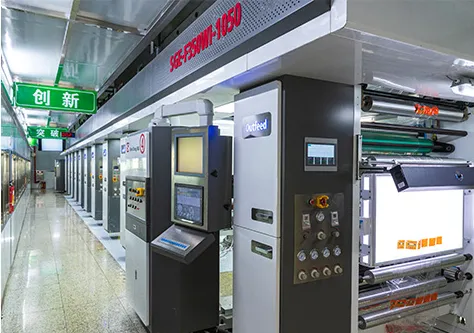
Zhongjia Packaging operates modern production facilities with strict quality management systems, allowing our production lines to maintain full operational capacity. This stability enables us to continue supplying high-quality packaging products to global markets without interruption.
For international buyers seeking reliability in the flexible packaging industry, production stability is often just as important as price.
Sustainable Innovation: Eco-Friendly Flexible Packaging with Water-Based Ink
Beyond supply chain resilience, Zhongjia Packaging is committed to advancing sustainability in the flexible packaging industry.
En tant que professional flexible packaging manufacturer specializing in water-based ink printing, we actively promote environmentally responsible packaging solutions.
Our production process offers several advantages:
- Technologie d'impression à base d'encre à base d'eau, reducing solvent emissions
- Eco-friendly materials compatible with recyclable packaging structures
- High-quality flexible packaging for food, pharmaceutical, and consumer products
- Compliance with international certifications including ISO22000 and WCA
Water-based ink printing significantly reduces environmental impact compared to traditional solvent-based processes. As sustainability becomes a key purchasing factor worldwide, environmentally responsible production is becoming a core competitive advantage in the l'industrie de l'emballage souple.
The Future of Supply Chains in the Flexible Packaging Industry
The current crisis serves as an important reminder: the traditional “efficiency-first” supply chain model is evolving. Today, resilience and sustainability are equally important.
For companies in the flexible packaging industry, the future will require three major transformations:
1. From reactive response to proactive risk monitoring
Businesses must track geopolitical developments, logistics conditions, and raw material markets more closely.
2. From cost center to strategic value
A reliable supply chain is no longer just an operational function — it is a core promise to customers.
3. From linear supply chains to resilient networks
Diversified sourcing, flexible logistics routes, and multi-node supplier networks will define the next generation of supply chains in the l'industrie de l'emballage souple.
Stability Is the Most Valuable Asset
In times of uncertainty, a stable supply partner is worth more than any short-term price advantage.
The Middle East conflict may be reshaping shipping routes and energy markets, but it is also revealing which companies have built truly resilient operations.
At Zhongjia Packaging, we believe that strong supply chains, sustainable manufacturing, and long-term partnerships are the foundation of success in the global flexible packaging industry.
The storm will eventually pass — but the companies that strengthen their systems during the crisis will emerge stronger and ready for new opportunities.
